
How to choose a safari lodge, beyond the photographs
Location, wildlife, guiding, privacy and the questions that reveal what a lodge is really like: a guide to choosing the stays that shape every day of a safari.
A safari lodge does far more than provide a beautiful room between game drives. It shapes the rhythm of each morning, the intimacy of every sighting and the feeling you carry home. Choosing well means looking past polished photographs to find a place that suits the way you want to experience East Africa.
By the Queen of East Africa journey designers
- Start with location: what a lodge’s position makes possible matters more than the view from the suite.
- Private conservancies allow walks, night drives and off-road tracking with fewer vehicles; national parks hold some of the great spectacles, such as the Mara River crossings.
- Guiding and service shape the memories: ask about private vehicles, guests per vehicle and how flexible the day can be.
- Give each lodge a role in the journey, and spend most where the most meaningful moments will happen.
Start with your safari style
Before comparing rooms, decide what kind of safari you want. A honeymoon calls for privacy and a quietly attentive team. A multigenerational journey benefits from connecting suites, flexible meal times and gentle options for every age. Photographers need excellent guiding, the right vehicle and productive habitats more than a dramatic bathtub.
Think about pace, too. Some lodges run a classic rhythm of early and late drives; others offer private vehicles, walking safaris, night drives or long mornings watching wildlife from the deck. Neither is better: the question is whether the lodge’s rhythm suits yours.
Location is more than a pin on the map
Two lodges in the same reserve can offer very different safaris. One may sit near the airstrip but far from the best wildlife; another may lie deep in a conservancy where remoteness is the point. Ask not just where a lodge is, but what its position makes possible.
| Choice | What it offers | Consider |
|---|---|---|
| Private conservancy | Fewer vehicles, walks, night drives and off-road tracking where permitted; income for local landowners | Drives into the national reserve for some spectacles, such as river crossings |
| National park or reserve | Access to the headline wildlife areas and seasonal events | More vehicles at sightings; activities limited to game drives in most parks |
| Seasonal camp | Placed for the herds at their best for your month | Canvas and a camp feel rather than a permanent lodge |
| Permanent lodge | Larger suites, pools, spas and more amenities | Fixed position, so the season matters more |
In Uganda, location shapes the whole route: Bwindi’s gorilla sectors are not interchangeable, and travelling between them takes far longer than the map suggests. Our guides to the best lodges in Kenya, Uganda and Rwanda go region by region.
The wildlife beyond the view
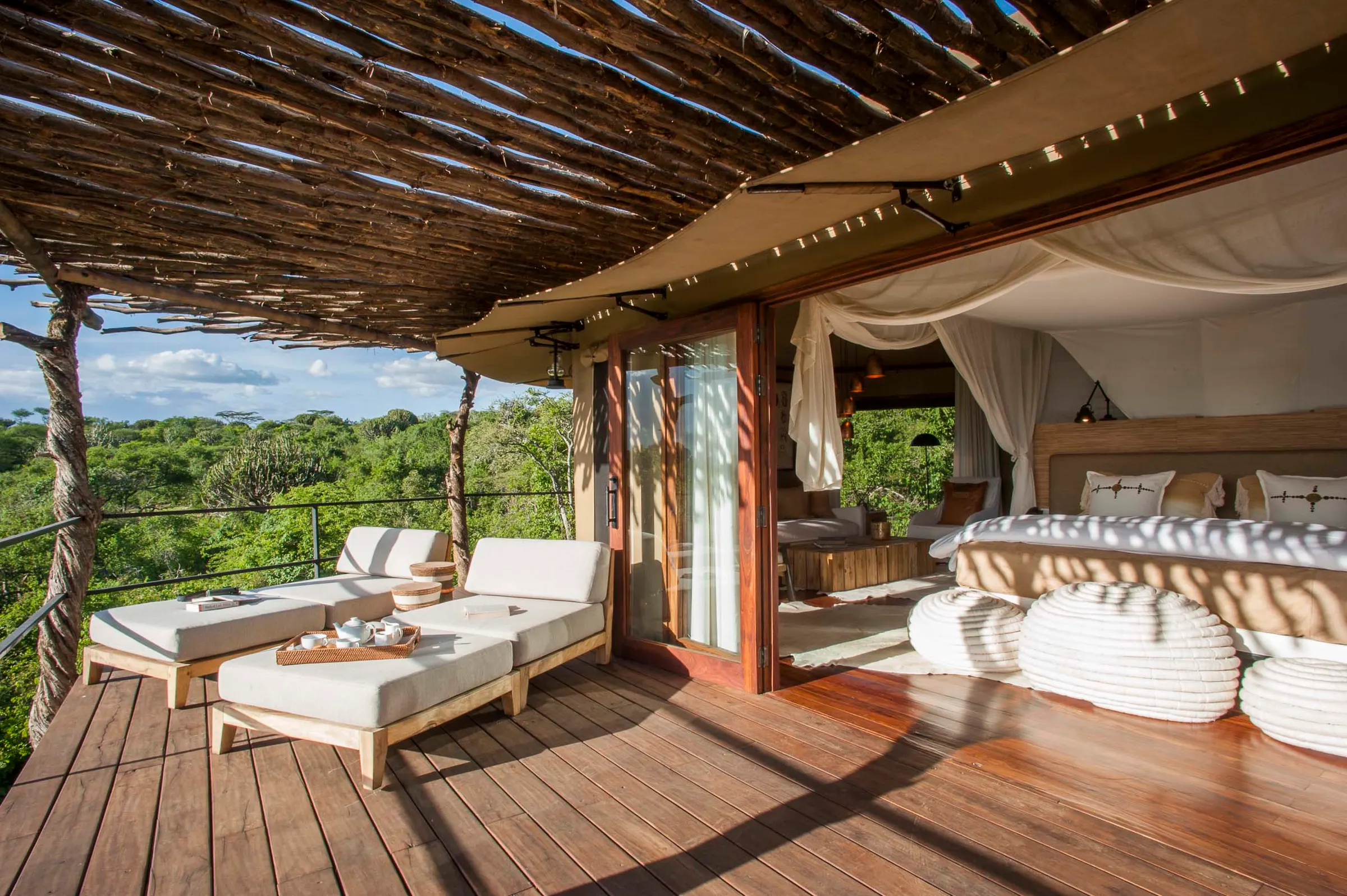
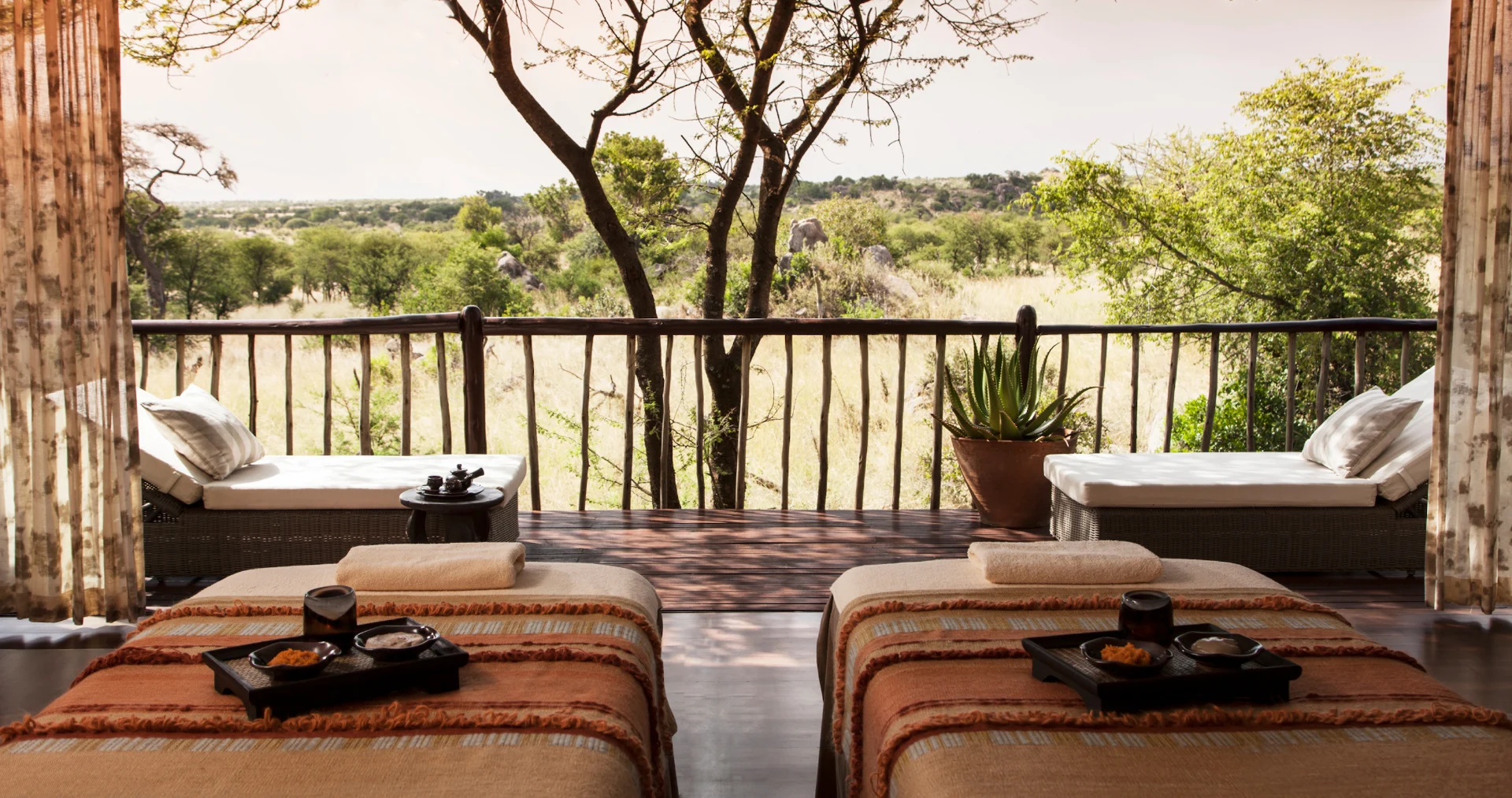
A sweeping view is memorable, but it is not the same as wildlife access. Some lodges overlook a river or waterhole and deliver sightings from the deck; others sit in secluded settings where the game viewing begins after a drive. Ask how long a typical drive takes to reach the key areas, which species are reliably seen and how the season changes things.
A lodge that is perfect for the Serengeti’s calving season may be the wrong choice for the river crossings later in the year. Our guide to the Great Migration by month explains why.
The most beautiful lodge is not always the best fit
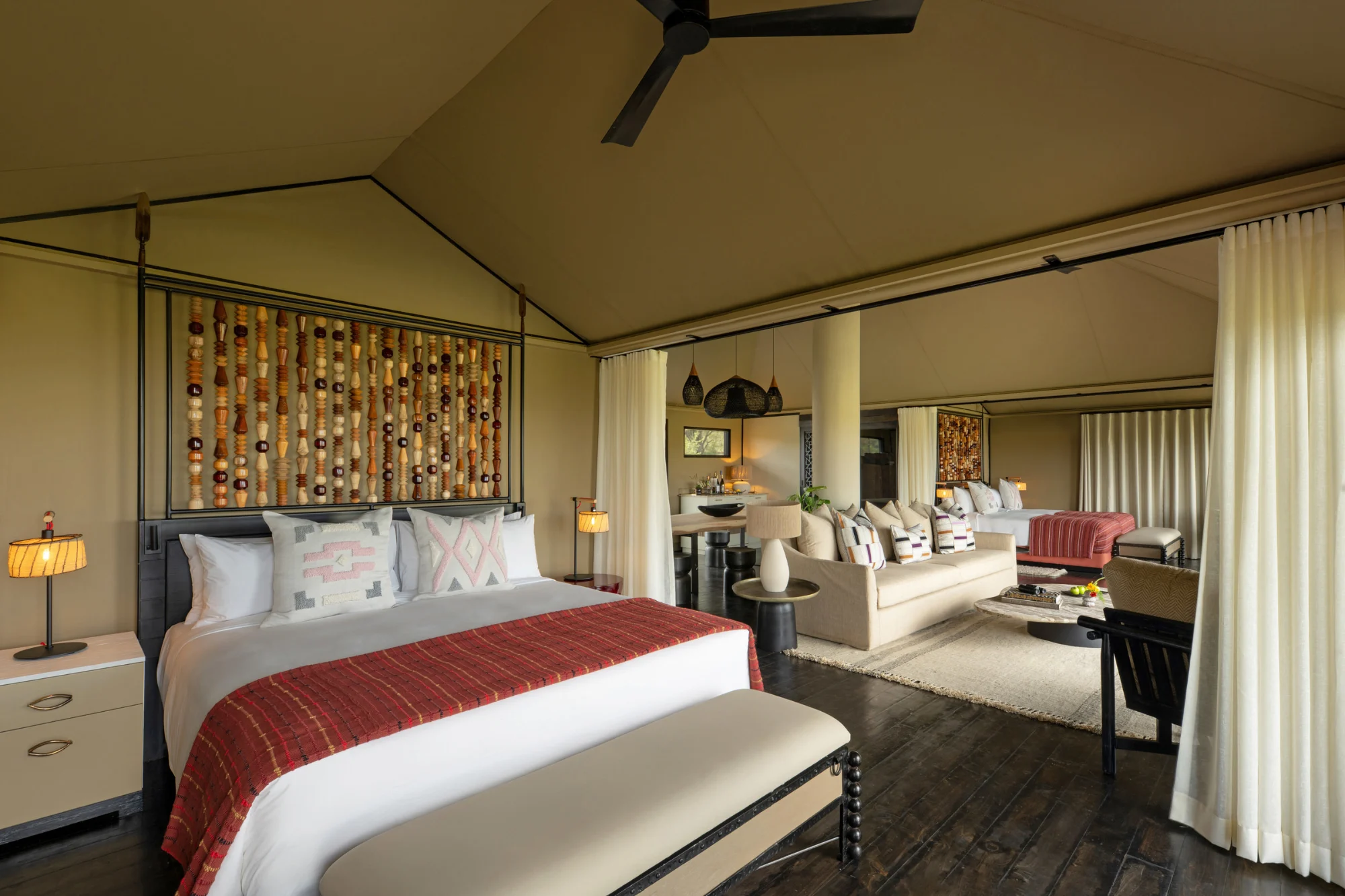
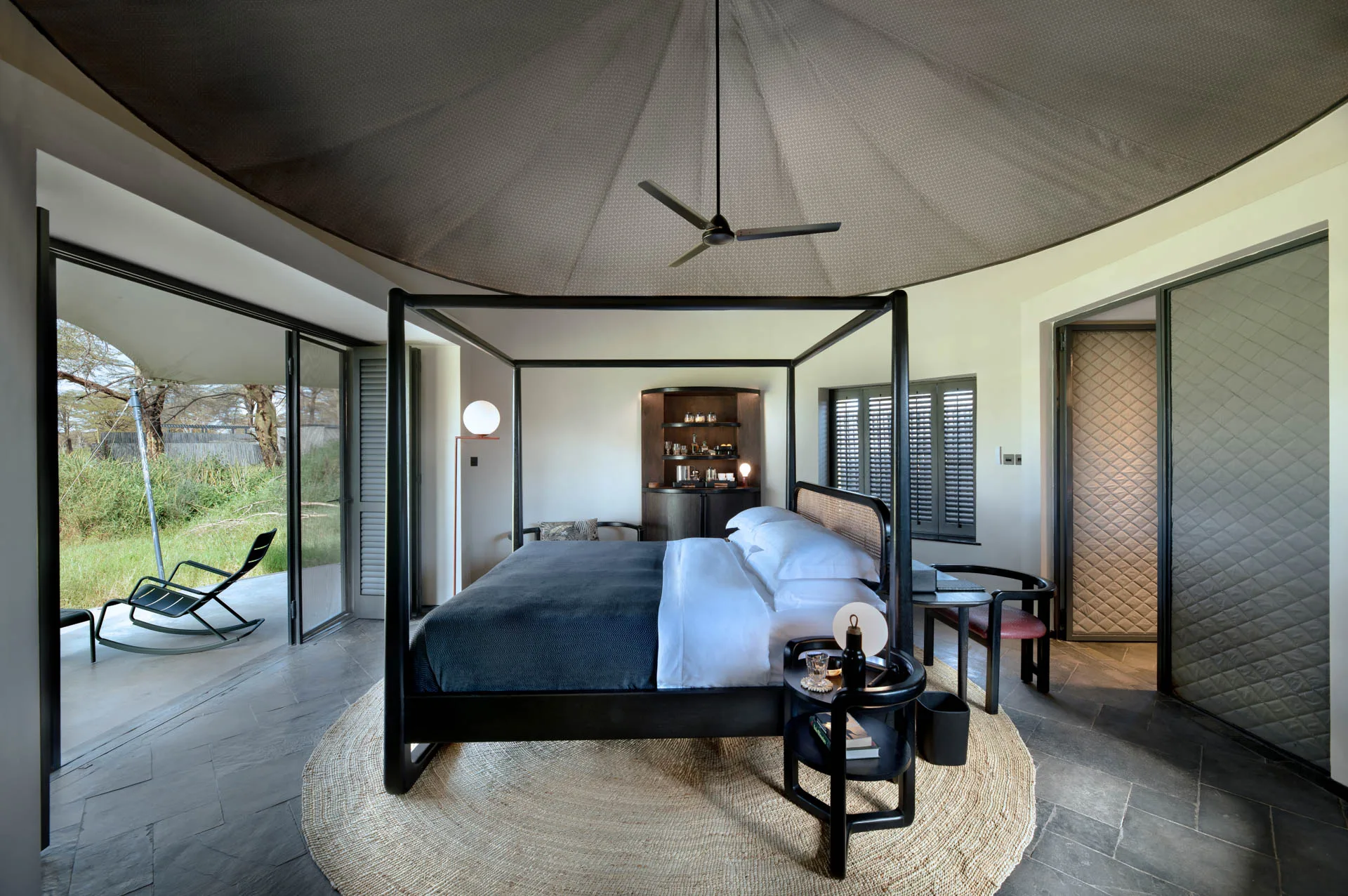
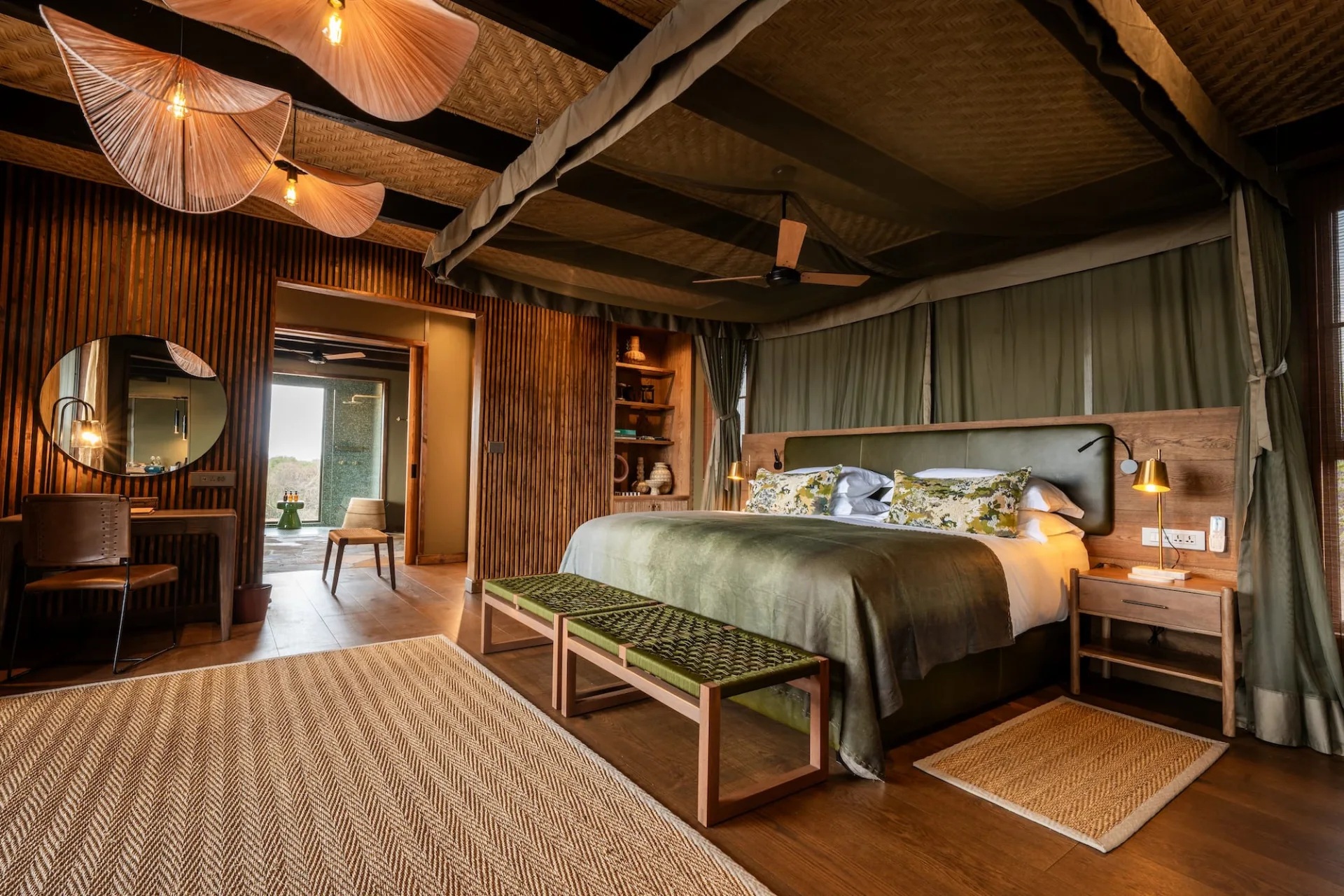
Choose an aesthetic that makes you feel at ease, contemporary, classic canvas or rooted in local craft, then look past the styling to the details that shape comfort: the distance between rooms, outdoor space, whether bathrooms are open-plan or enclosed, and how the suite handles heat and cold.
Ask about the practical luxuries too: charging in the room, reliable hot water, laundry, Wi-Fi and whether air conditioning is needed in that location. In many safari areas, good design, fans and the evening air are more appropriate than air conditioning. The aim is not to recreate a city hotel, but to know the character of the stay before you arrive.
Guiding and service define the experience
The most lasting safari memories are often shaped by people. An exceptional guide reads the land with patience and knows when silence is the most generous kind of service. A remarkable lodge team remembers how you take your coffee and creates warmth without intrusion.
Ask whether drives are shared or private, how many guests sit in each vehicle, and whether a private vehicle can be arranged. It matters most for families, photographers and honeymooners. Ask, too, how the lodge supports the surrounding community and conservation; the best relationships enrich the guest experience rather than staging it.
Give each lodge a role in the journey
A safari is more compelling when each stay has its own role. You might begin with a restful night in Nairobi at Hemingways, continue to a Mara camp with sweeping views, then move to a quieter Laikipia conservancy for walks and night drives. In Uganda, pair a forest lodge in Kibale with a more restorative stay near Bwindi; in Tanzania, contrast a seasonal Serengeti camp with a permanent lodge in the highlands, then end on Zanzibar.
Direct the most attention, and budget, to the places where the most meaningful moments will happen: the lodge near the gorilla trek, the camp in the heart of the migration, the final stay where you celebrate. An overnight near an airport can be chosen simply for ease.
A journey of contrasting stays
Our 10-day Laikipia, Samburu and Masai Mara journey shows how three very different lodges can make one coherent safari.
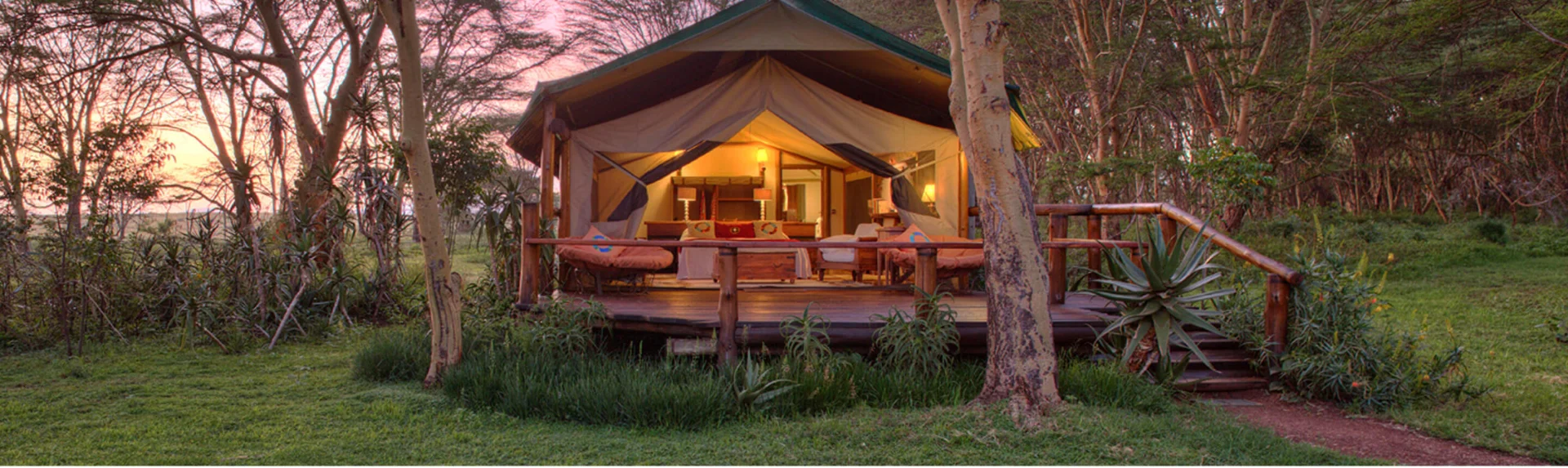
Ten days across three distinct regions, with internal flights. Shaped to your dates.
Choosing a safari lodge, answered
What is the difference between a safari lodge and a tented camp?
A lodge is a permanent building, often with larger rooms, pools and spas. A tented camp uses canvas suites, which can be just as luxurious and feel closer to the wild; some move with the seasons.
Is a private conservancy better than a national park?
They offer different things. Conservancies limit guest numbers and allow walks, night drives and off-road tracking; national parks hold some of the great spectacles. Many journeys combine both.
How many lodges should I stay at on safari?
Two or three on a typical 8 to 12 night safari, with three nights in each. One-night stays rarely feel relaxing.
What should I ask before booking a safari lodge?
Ask about drive times to the main wildlife areas, private vehicles, room privacy, child policies, what is included, and how the lodge feels before dawn and after dark.
Where should I spend the most on a safari?
On the stays tied to the most meaningful moments: near the gorilla trek, in the heart of the migration, or the final lodge of a celebration.
Tell us what matters most, and we will choose the lodges
Share your dates and what matters most to you. A Queen journey designer will reply personally with a route, the lodges and a written proposal with the exact price, and a private consultation, if you wish, by phone or Zoom. There is no obligation until you choose to reserve.
Plan My Journey Or call 602-816-8206Explore more: Private Safaris · Best Kenya Lodges · Best Uganda Lodges · Rwanda Lodges