
Great Migration Safaris
You Want to See the Great Migration.The Real Question Is Where — and When.
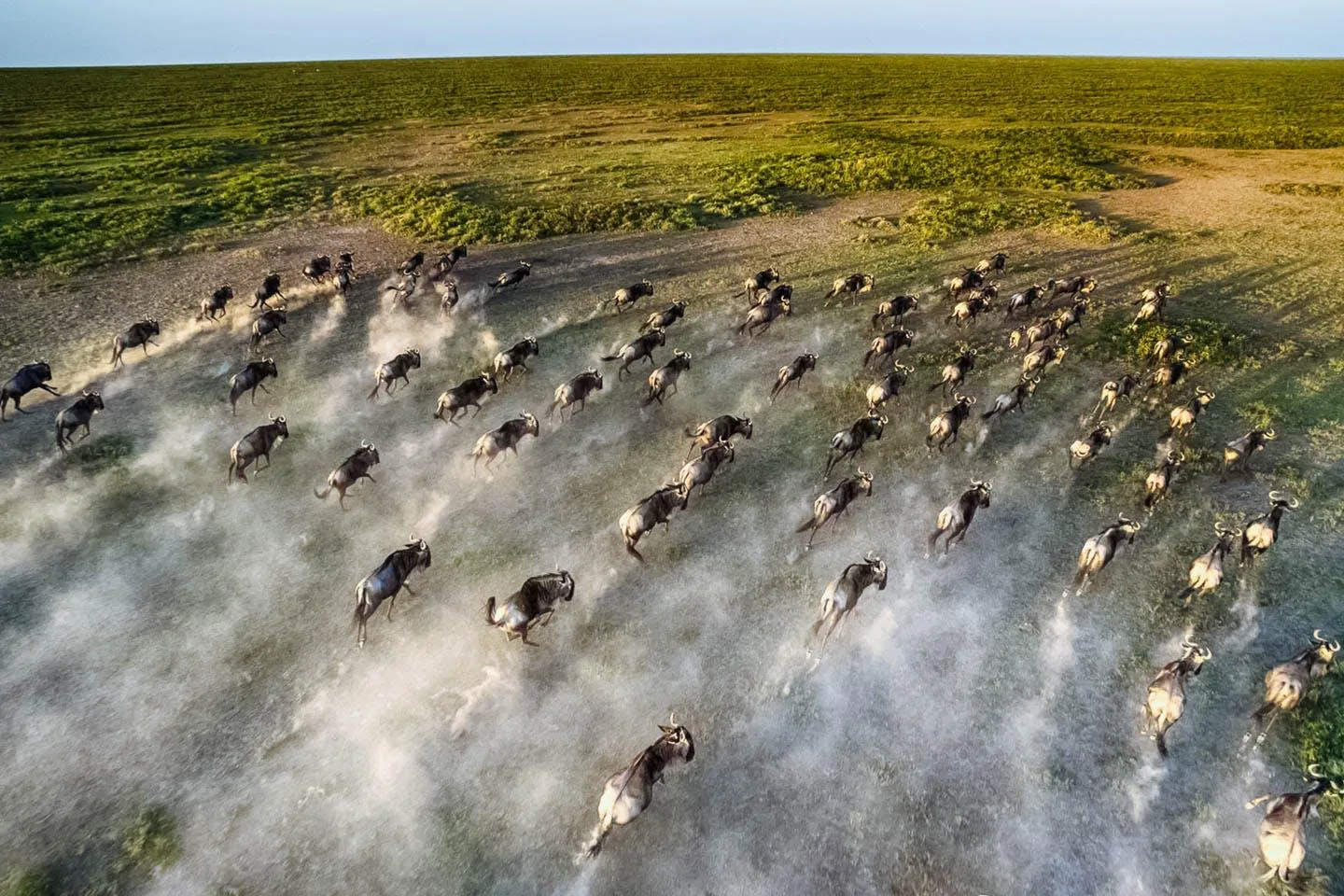
The Great Migration moves through Tanzania and Kenya throughout the year. In February, you might be on the southern Serengeti plains as wildebeest calves are being born and predators follow the herds.
By August, you could be farther north, waiting near the Mara River to see whether thousands of wildebeest will cross.
There is no single best month. It depends on what you want to see.
The migration cannot be controlled.The planning can.
What Do You Want to See?
Start With the Experience, Not the Month.
Different months reveal different parts of the same migration cycle. Begin with the moment you most want to witness, and we’ll help you choose the right place and time to experience it.
Calving & Newborns
The Southern Plains
January–March · Southern Serengeti & Ndutu
February is particularly known for wildebeest calving. Expect large herds, newborns, active predators and green plains.
Mara River Crossings
The Northern Ecosystem
July–October · Northern Serengeti & Maasai Mara
July through October is the main period for Mara River crossings as the herds move through the northern Serengeti and Maasai Mara.
Crossings cannot be guaranteed. Spending enough time in the area and choosing the right location gives travellers a better chance of witnessing one.
Predators
Where the Herds Go, Predators Follow
Lions, cheetahs, leopards and hyenas are present throughout the Serengeti–Mara ecosystem. The southern plains during calving season are particularly good for travellers interested in predator activity.
Not Sure When to Travel?
Tell Us Your Dates
Share your travel dates and what you most want to see. We’ll recommend where to stay and which part of the migration is most likely to be accessible during your trip.
When Is the Great Migration?
The Migration Happens All Year.
The Great Migration is the year-round movement of more than a million wildebeest, joined by zebra and other grazing animals, across the Serengeti–Mara ecosystem.
The herds move in response to rainfall, fresh grazing and water, so their exact location and timing can vary from year to year.
There is no single month for the Great Migration. What changes throughout the year is where the herds are — and what you can experience.
The Great Migration by Month
Where Should You Go?
Four movements of one year. Find your dates on the line, and the rest of the safari is built around where the herds are likely to be.
January – March
Calving & Newborns
Southern Serengeti & Ndutu
Large herds gather across the southern plains, with the main wildebeest calving period typically occurring from late January through March.
Best for — newborns, predator activity, photography and green landscapes.
April – June
The Herds Move North
Central & Western Serengeti
As conditions change, the herds move north and west through the Serengeti. May and June can bring large concentrations of wildebeest and zebra on the move.
Best for — moving herds, changing landscapes and generally fewer visitors than peak crossing season.
July – October
Mara River Crossings
Northern Serengeti & Maasai Mara
The herds move into the northern Serengeti and Maasai Mara during this period. Mara River crossings may occur, but their timing and location cannot be predicted.
Best for — large herds, predator activity and opportunities to see Mara River crossings.
November – December
The Return South
Serengeti — Moving South
As the seasonal rains return, the herds generally begin moving south toward the plains ahead of the next calving season.
Best for — wildlife, changing landscapes and travel outside the peak river-crossing period.
The herd gathers on the bank. Nothing happens for an hour.
Mara River Crossings
The Moment Everyone Wants. The Moment Nobody Can Promise.
A river crossing may begin after hours of waiting — or when nobody expects it.
Wildebeest can gather along the bank, approach the water, retreat and gather again. Then one animal enters and thousands may follow.
No responsible safari company can tell you exactly when that will happen.
What we can do is choose the right area, allow enough nights, arrange excellent guiding and avoid an itinerary that rushes you away just when something is developing.
If seeing a Mara River crossing matters to you, tell us from the beginning.
Wildebeest Calving Season
February Is About Much More Than Newborns.
Across the southern Serengeti and Ndutu plains, large numbers of wildebeest give birth during the principal calving period.
The calves need to stand and move quickly. Lions, cheetahs and hyenas are never far from the herds.
For travellers interested in wildlife behaviour and photography, this can be one of the most rewarding times to experience the Great Migration.
Predators do not follow the calendar. They follow the herds.
Kenya or Tanzania?
Your Dates Usually Point Us in the Right Direction.
Tanzania
Tanzania gives access to much of the annual migration cycle — from calving in the southern Serengeti to migration activity around the Mara River in the north.
Especially strong for
- Serengeti calving season
- Northern Serengeti river crossings
- Migration + Ngorongoro
- Migration + Zanzibar
- Longer Tanzania safaris
Kenya
Kenya is particularly important when the migration reaches the Maasai Mara ecosystem.
Especially strong for
- Maasai Mara migration season
- Excellent predator sightings
- Private conservancies
- Wider Kenya safari circuits
- Safari + Kenya coast
You Can Also Do Both
When your dates and trip length allow, Kenya and Tanzania can be combined into one journey.
Help Me Choose Kenya or Tanzania →Where You Stay
Stay Where the Migration Is.
Where you stay can make a significant difference during the Great Migration. We select camps around the season, likely position of the herds and the route we are planning for you.
Southern Serengeti
&Beyond Serengeti Under Canvas
Calving Season · January–March
An intimate mobile safari camp that follows the Great Migration through the Serengeti, placing you close to the southern plains during the extraordinary calving season.
View Stay →Northern Serengeti
Singita Mara River Tented Camp
River-Crossing Season · July–October
An intimate six-suite camp in the remote Lamai Triangle, offering an exceptional base for experiencing the Great Migration as the herds move through the northern Serengeti and toward the Mara River.
View Stay →Maasai Mara
Angama Mara
Great Migration Season · July–October
Set high above the Mara Triangle, Angama Mara pairs exceptional privacy and panoramic views with direct access to one of the Maasai Mara’s most rewarding areas for experiencing the Great Migration.
View Stay →These are examples of stays we may recommend. Your accommodation is selected around your dates, route and the expected movement of the herds.
Design My Migration Safari →Private Great Migration Safaris
Your Vehicle. Your Guide. Your Time.
A private vehicle gives you more control over each day. Stay longer when the wildlife is active, wait when the herds begin gathering, or spend more time getting the photograph you came for.
Your guide adjusts the day around the conditions and what you want to see.
More Than the Herds
Build the Journey Around the Migration.
The Serengeti–Mara ecosystem offers far more than wildebeest — and East Africa offers far more than the Serengeti–Mara.
Migration + Gorillas
Start on the open plains, then continue to Uganda or Rwanda. One journey is about scale; the other brings you into the forest, on foot, for time with a single gorilla family.
Explore Gorilla Trekking →Migration + Zanzibar
Follow the migration through the Serengeti, then fly to Zanzibar. After early game drives and long days in the field, a few days beside the Indian Ocean.
Explore Migration + Zanzibar →Migration + Big Five
Lion, leopard, elephant and buffalo can all form part of the wider safari. If seeing rhino matters to you, we’ll route the journey accordingly.
Explore Big Five Safaris →Why Plan With Queen Safaris
We Don’t Sell You a Migration Date. We Position You for the Experience.
We consider your dates, likely herd location, what you most want to see, camp position, number of nights, guiding, private vehicle options and what else you want to experience in East Africa.
Then we build the safari around those priorities.
- No guaranteed crossings.
- No famous lodge simply because it is famous.
- No rushing through the area you travelled all this way to see.
Great Migration FAQ
Questions Before You Choose Your Dates.
What is the best time to see the Great Migration?
The Great Migration happens throughout the year. January through March is particularly important for calving in the southern Serengeti, while July through October is generally associated with northern Serengeti and Maasai Mara migration activity and possible Mara River crossings.
The better question is which part of the cycle you want to see.
What is the best month for wildebeest calving?
February is particularly associated with the principal wildebeest calving period in the southern Serengeti and Ndutu region.
What is the best time for Mara River crossings?
Travellers generally focus on July through October. Exact crossing dates cannot be predicted because herd movement depends on rainfall, grazing and other natural conditions.
Can you guarantee a river crossing?
No. We can position you in an appropriate area, recommend enough nights and arrange excellent guiding. Nature determines when and where the animals cross.
Anyone who promises you a crossing is promising something they do not control.
Is Kenya or Tanzania better for the Great Migration?
It depends on your dates. Tanzania hosts much of the annual migration cycle, including calving and the northern Serengeti phase. Kenya offers the Maasai Mara phase together with excellent resident wildlife and selected conservancies.
How many days should I spend on a Great Migration safari?
Allow at least three to four nights in the appropriate migration area. Five to seven nights gives you greater flexibility when the migration is a major priority, particularly during the unpredictable river-crossing period.
How much does a luxury Great Migration safari cost?
The price depends on season, number of nights, accommodation, private vehicle arrangements, internal flights, park fees and the number of travellers.
Tell us your dates and how you want to travel, and we’ll prepare a tailored proposal.
Migration Journeys
Journeys Built Around the Migration.
See the migration in Kenya, Tanzania, or combine both — with the option to finish on Zanzibar.
7 Days
Tanzania Migration Safari
Follow the herds through the Serengeti, with the route planned around where the migration is expected to be during your travel dates.
View Journey →7 Days
Kenya Migration Safari
Experience the migration in the Maasai Mara, with game drives planned around the movement of the herds.
View Journey →10 Days
Kenya & Tanzania Migration Safari
Combine the Maasai Mara and Serengeti in one journey, with time for the migration and other wildlife along the way.
View Journey →12 Days
Migration & Zanzibar
Experience the migration on safari, then slow things down with a few days on Zanzibar.
View Journey →You Can’t Schedule the Great Migration. But You Can Be in the Right Place to See It.
In the southern Serengeti, that might mean travelling during calving season, when thousands of wildebeest are born across the plains.
Later in the year, it might mean spending several nights near the Mara River, giving yourself the best opportunity to witness a crossing.
The exact moment can’t be guaranteed. Good planning and positioning make the difference.
Tell us when you want to travel and what you most want to see. We’ll recommend where to go, when to be there and how much time to allow.
Kenya · Tanzania · Private Tailor-Made Great Migration Safaris
Before You Go
Where will Africa take you?
Whether you are planning your own journey or designing one for a client, our East Africa specialists are here to help.
I’m a Traveler
Plan My Journey →I’m a Travel Advisor
Inquire for My Client →