Traveling east toward Jinja and Mount Elgon?
Coffee can become part of that route.

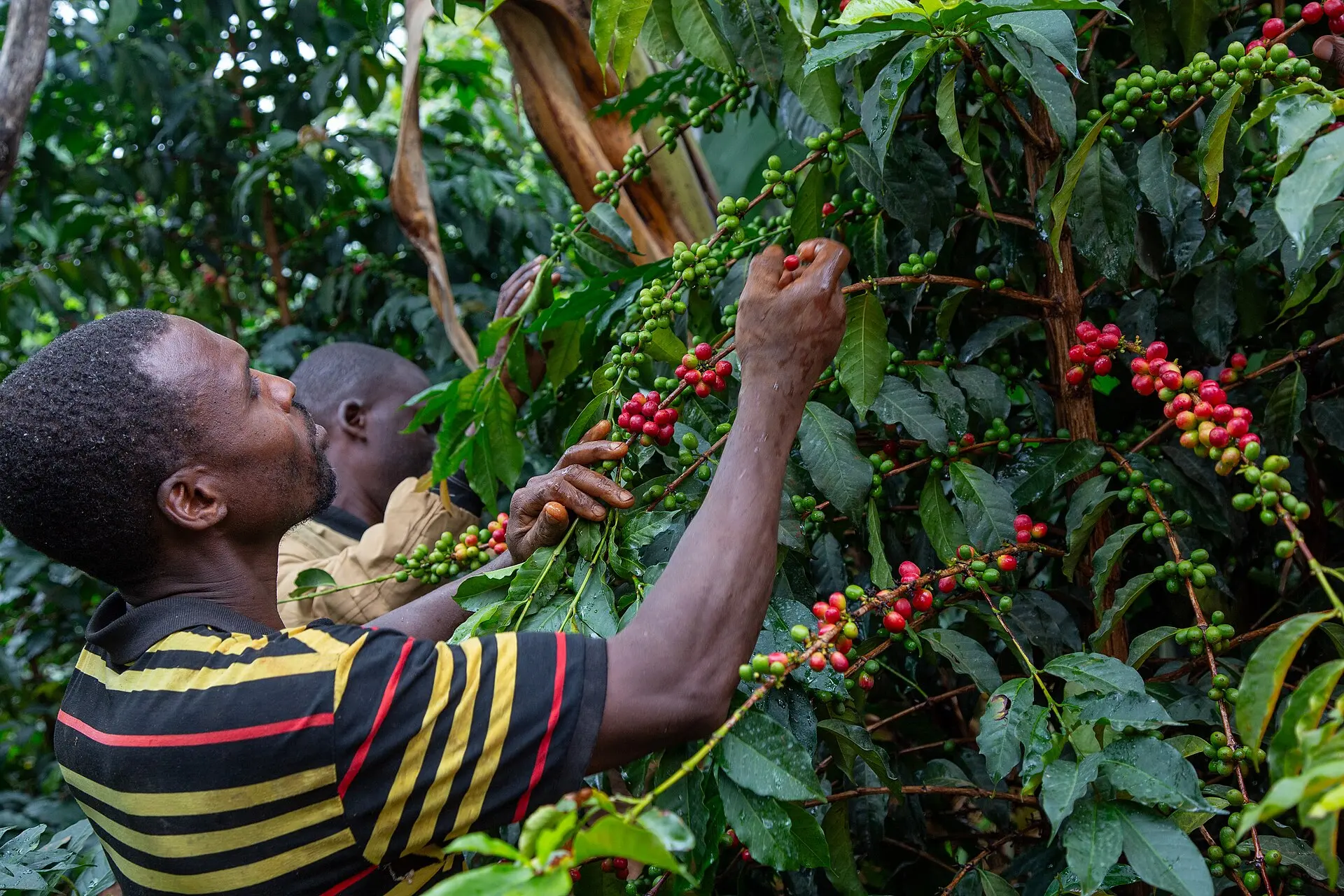
If you drink coffee every morning, there is something worth understanding about where it begins.
In East Africa, you can walk through coffee gardens with growers, see ripe cherries on the tree, learn how coffee is harvested and processed and, depending on the experience and season, follow it through drying, roasting and brewing.
Then drink it.
Uganda is particularly interesting because it produces both Robusta and Arabica, while Rwanda, Kenya and Tanzania bring their own origins, landscapes and coffee traditions.
You don’t need to know anything about coffee before you come.And if you know a great deal about it, tell us.
We’ll design a very different journey.
You Don’t Need to Come to East Africa for Coffee
Most travelers aren’t coming solely because of coffee.
They’re coming for gorillas.
That’s exactly why coffee works so well.
It doesn’t need to become another trip.
We can incorporate it naturally into the journey you’re already taking.
How It Fits
And if coffee is one of the main reasons you’re traveling?
Tell us. Then we go deeper.
Uganda
Uganda produces both Robusta and Arabica, with coffee grown across several regions of the country.
That gives us considerable flexibility.
We don’t force every traveler into the same coffee tour.
Traveling east toward Jinja and Mount Elgon?
Coffee can become part of that route.
Heading west toward Kibale, the Rwenzoris, Queen Elizabeth National Park or Bwindi?
We can look for an experience that belongs naturally within that journey.
Staying around Kampala?
The city’s cafés and roasters can provide another side of Uganda’s coffee story.
For most travelers, a few hours or a day may be enough.
For a serious coffee traveler, we can build much more around it.
Robusta + Arabica
Uganda gives coffee travelers the opportunity to explore two major coffee species.
Robusta is indigenous to Uganda, and the country is an important producer. It is also increasingly associated with higher-quality Fine Robusta alongside its large commercial production.
Move into Uganda’s higher-altitude regions and Arabica becomes part of the story.
Mount Elgon in eastern Uganda and the Rwenzori region in western Uganda are important Arabica-growing areas.
And if none of that matters to you?
Have a good cup of coffee and enjoy Uganda.
Mount Elgon
Mount Elgon is one of Uganda’s strongest regions for building coffee into a wider journey.
Then continue toward Jinja and the Nile, or make eastern Uganda part of a longer journey through the country.
For a serious coffee traveler, stay longer.
For everyone else, one well-chosen experience may be enough.
We don’t add days simply so an itinerary can say “coffee tour.”
Coffee Beneath the Rwenzoris
Western Uganda creates another opportunity.
If you’re already traveling toward Kibale, the Rwenzori Mountains, Queen Elizabeth National Park or Bwindi, coffee can become part of the route rather than an unrelated excursion.
This is how we prefer to incorporate coffee.
It should make geographical sense.
What Actually Happens on a Coffee Farm?
Coffee is agriculture.
What you see depends on where you are, who is hosting you and what is happening on the farm during your visit.
During harvest, you may see ripe cherries being picked and, where appropriate, perhaps participate.
At another time, the experience may focus on the farm, processing, drying, roasting or tasting.
Depending on the operation, you may learn about stages such as harvesting, sorting, pulping, fermentation, washing or natural processing, drying, grading, roasting, grinding and brewing.
You don’t need to memorize the process.
From Cherry to Cup
Coffee on a tree looks very different from the coffee in your kitchen.
01
The cherry must be harvested and processed.
02
The coffee is dried and sorted.
03
Eventually it is roasted.
04
Processing choices influence the final cup.
If you’ve seen terms such as washed or natural on coffee packaging without really knowing what they mean, seeing coffee at origin gives those words context.
And where roasting and tasting are part of the experience, sit down and try the finished coffee.
Meet the People Behind the Coffee
The farmer matters.
So do the people processing, sorting, drying, roasting and brewing it.
Worth Asking
You don’t need to turn your holiday into an agricultural economics seminar.
But understanding who produces your coffee changes what “farm to cup” actually means.
Coffee + Gorillas + Chimpanzees + Safari
In Uganda, coffee can fit particularly well into a western or southwestern journey.
Spend time around coffee-growing communities, then continue toward Bwindi for mountain gorilla trekking.
Explore Gorilla Trekking →Kibale gives you another reason to stay longer. Track chimpanzees, experience Bigodi and explore coffee, agriculture, food or community life around western Uganda.
Explore Chimpanzee Trekking →Spend a morning learning about coffee. Then continue toward Queen Elizabeth National Park or another safari destination.
Explore Uganda Safaris →The point isn’t to squeeze everything into one trip.
It is to choose combinations that naturally belong together.
Rwanda
Rwanda gives coffee travelers a different landscape and origin.
The country is particularly associated with Arabica, much of it grown by smallholder farmers.
Around Lake Kivu, coffee can combine beautifully with the wider journey.
Depending on what is available for your dates, experiences may include farms or washing stations where you can learn how coffee moves through stages such as sorting, pulping, fermentation, washing and drying.
Coffee + Rwanda Gorillas
One route we particularly like is
Instead of simply
For travelers with enough time, Lake Kivu gives the journey another dimension.
Coffee can be part of that.
Add Coffee to My Rwanda Journey →Kenya
Many coffee drinkers recognize Kenya long before they visit it.
Where suitable access is available, coffee farms, processing, roasting or tasting can be incorporated into a wider Kenya journey.
Because many safaris begin or end around Nairobi, this doesn’t necessarily require redesigning the trip.
Coffee can become
Coffee is one part of Kenya. It doesn’t need to pretend to be all of it.
Tanzania
Northern Tanzania isn’t only safari and Kilimanjaro.
It is also coffee country.
If you’re already traveling through the region, we can incorporate coffee before or after a Kilimanjaro climb, or before continuing into safari.
On the way
One journey. Very different experiences.
Where You Could Stay
The right lodge puts you a short drive from the farms, not a long day away. These are the places we look at first, region by region.
Kyaninga Lodge, above its crater lake near Fort Portal.
Every lodge is confirmed for your dates when we design your journey.
If You Really Know Coffee, Tell Us
There is a big difference between someone who enjoys coffee and someone whose profession revolves around it.
If you’re a roaster, buyer, importer, barista, café owner, chef, hospitality professional, food writer, researcher, agricultural professional or serious coffee enthusiast, tell us before we design your itinerary.
A specialist journey may incorporate growers, processing facilities, washing stations, cupping, roasting and industry connections according to the purpose of the trip and the professional access available.
Uganda can be particularly interesting because of the opportunity to explore both Arabica and Robusta.
Or take the journey across several origins.
For the right traveler, coffee doesn’t need to be an excursion. It can be the journey.
Universities & Professional Groups
Coffee provides a useful way to explore agriculture, climate, trade, economics, supply chains, gender, entrepreneurship, processing, sustainability, export, tourism and consumer behavior.
For universities and professional groups, we can design journeys around specific academic or industry objectives rather than offering a standard farm visit.
And yes.
You can still go on safari afterwards.
Plan a Specialist Coffee Journey →Bring the Person Who Doesn’t Drink Coffee
One traveler may want to discuss fermentation for four hours.
Their partner may want tea.
That’s fine.
A good coffee experience can also involve landscape, agriculture, food and people.
Coffee Is Also Community
A beautiful coffee farm isn’t simply a backdrop for photographs.
It is a business.
Sometimes one family’s.
Sometimes part of a cooperative involving many growers.
So we want to understand who owns the experience, who hosts, who guides, who benefits and how tourism fits alongside the actual coffee operation.
We favor experiences where people involved in producing coffee have a meaningful role in what visitors experience.
Real Coffee Has a Season
Coffee cherries don’t appear because you booked a holiday.
Agriculture has its own calendar.
Harvest periods vary by country, region, altitude and season.
If ripe cherries are being harvested during your visit and participation is appropriate, excellent.
If they’re not, we won’t manufacture a harvest for photographs.
There can still be plenty to experience: the farm, trees, processing, drying, roasting, tasting, people and landscape.
Real agriculture is seasonal. That’s part of experiencing it properly.
One Morning or an Entire Journey?
For most travelers, coffee may deserve a few hours or a day.
For a serious enthusiast or professional traveler, several days—or an entire origin-focused journey—may make more sense.
There is no correct amount.
We simply need to know how interested you really are.
Coffee Experiences FAQ
Yes. Uganda produces both Robusta and Arabica and has several coffee-growing regions, including Mount Elgon and the Rwenzori region.
Yes. Robusta is indigenous to Uganda and remains an important part of the country’s coffee industry.
Yes. Arabica is grown particularly in higher-altitude regions, including Mount Elgon and the Rwenzoris.
Yes, where suitable farms or coffee enterprises welcome visitors. We select experiences according to your route, interests, dates and current access.
Yes. Coffee can work naturally within a western or southwestern Uganda journey continuing toward Bwindi.
Yes. Coffee and community experiences can complement a wider Kibale itinerary.
Possibly. It depends on harvest timing and whether the host allows visitor participation.
Depending on the farm, washing station or facility, you may see some stages of processing, drying or roasting.
Yes. Coffee can be incorporated into Rwanda itineraries, including around Lake Kivu.
Yes. Volcanoes National Park and Lake Kivu can work naturally within the same longer Rwanda journey.
Yes. Appropriate coffee experiences can be incorporated into Kenya itineraries and around northern Tanzania, including the Kilimanjaro region.
No.
Curiosity is enough.
Yes. We can design private journeys for serious enthusiasts and professional or educational groups, subject to the specialist access required.
Your Plan My Journey request comes straight to our team. We review where you are traveling, what else you want to experience and how much coffee matters to you, then come back to you personally to shape the journey.
The Queen of East Africa Approach
You don’t need to choose a “coffee package.”
Tell us where you’re traveling.
Tell us what else you want to experience.
And tell us how interested you are in coffee.
The experience should fit the traveler and the route.
You already know the drink.
Now meet some of the people, places and processes behind it.
Then continue to the gorillas. Safari. Kilimanjaro. Lake Kivu.
Or wherever the rest of your journey takes you.
Coffee can be one part of East Africa. Or the reason you came.
Uganda · Rwanda · Kenya · Tanzania · Private Coffee Journeys
Photography via Wikimedia Commons: Jameswasswa (CC BY-SA 4.0); Erinamukuta (CC BY-SA 4.0); Geossegawa (CC BY 4.0); Timothy Akolamazima (CC BY-SA 4.0); Philip Asedri Dradri (CC BY-SA 4.0); KBarigye (CC BY-SA 4.0); Daniel Case (CC BY-SA 4.0); Leloojr (CC BY-SA 4.0); Fiktube (CC BY-SA 4.0); Bukulu Steven (CC BY-SA 4.0); Rafał Kozubek (CC BY-SA 4.0); Vincent Mugaba (CC BY-SA 4.0); Denis Kasozi (CC BY-SA 4.0); Ericnkurunziza (CC BY-SA 4.0); Aline rw (CC BY-SA 4.0); DFID (CC BY 2.0); Nina R (CC BY 2.0); Lebu Ayiga (CC BY 4.0); Michael Shade and Ingo Wölbern (public domain). Licences: CC BY-SA 4.0, CC BY 4.0, CC BY 2.0.
Before You Go
Whether you are planning your own journey or designing one for a client, our East Africa specialists are here to help.
I’m a Traveler
Plan My Journey →I’m a Travel Advisor
Inquire for My Client →