
Plan the ultimate private Tanzania photo safari with expert Serengeti wildlife photography tips, luxury camps, custom vehicles, best seasons, camera gear advice, and tailor-made itineraries for photographers.
Planning a Private Tanzania Photo Safari is the best way to experience the Serengeti and Tanzania’s remote wilderness through the lens of a serious wildlife photographer.
With a custom photographic vehicle, expert guide, flexible game-drive schedules, and access to prime wildlife areas, photographers can capture dramatic predator action, intimate animal portraits, and breathtaking East African landscapes without the constraints of a standard group safari.
Tanzania is one of the world’s premier wildlife photography destinations. The Serengeti alone supports over two million large mammals, while Ngorongoro Crater, Tarangire, Ruaha, and Mahale offer entirely different photographic opportunities.
This guide explains how to choose the right season, vehicle, camps, and guiding team to create a truly exceptional photographic safari.
At Queen of East Africa Luxury Tours, we create ultimate Tanzania photography safaris that blend exclusive wildlife experiences, handpicked luxury accommodations, expert private guiding, and customised travel planning into one memorable East African journey.
Why Choose a Private Tanzania Photo Safari?
A Private Tanzania Photo Safari gives photographers something a standard group tour rarely provides: time, space, and creative freedom. Instead of rushing from sighting to sighting, you can remain with a subject for as long as the light and behaviour demand.
Most specialist operators limit vehicles to 2–5 photographers, ensuring generous shooting space and unrestricted access to both sides of the vehicle.
Custom-fitted 4x4s with rotating seats, beanbags, and drop-down sides allow low-angle photography, while expert photographic guides help with light, composition, and animal behaviour.
This combination of private access and flexible pacing transforms an ordinary safari into a focused wildlife photography expedition.
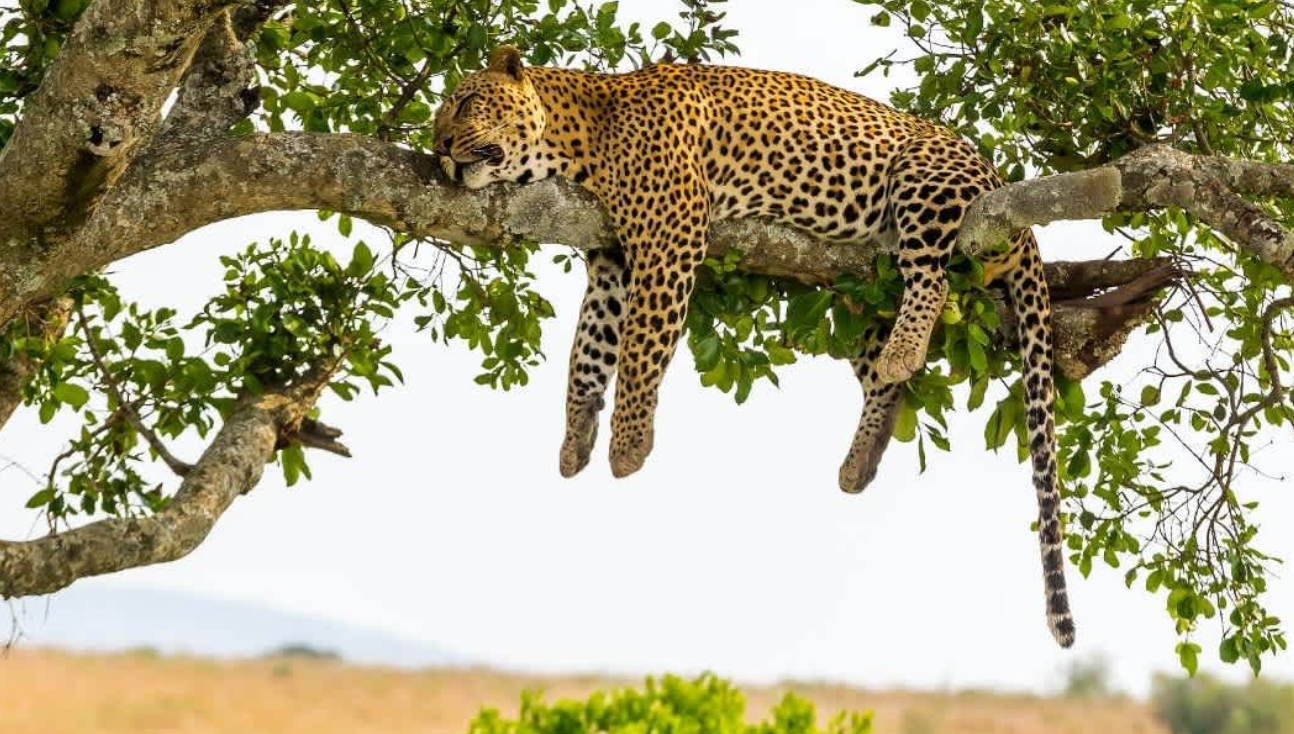
What Defines a Luxury Private Tanzania Photo Safari?
A luxury Private Tanzania Photo Safari is designed around the needs of the photographer rather than a fixed sightseeing schedule. Every decision—from departure times to vehicle positioning—is made with photography in mind.
The defining features include:
- Private or very small-group vehicles
- Flexible sunrise and sunset game drives
- Extended time at wildlife sightings
- Access to quieter conservancy areas
- Specialized photographic guiding
- Luxury camps in prime wildlife locations
The result is a deeper, more immersive experience that produces a stronger photographic portfolio and a far more personal connection with the wilderness.
Private Safari Vehicles and Small-Group Photography Advantages
Vehicle configuration is one of the most important factors in wildlife photography. On many standard safaris, photographers compete for window space and shoot over other passengers. On a Private Tanzania Photo Safari, vehicle occupancy is intentionally limited.
With only three to five photographers per vehicle, each guest typically has an entire row to themselves. This allows smooth movement of heavy telephoto lenses, unrestricted 360-degree views, and immediate access to changing wildlife action.
Small groups also create a collaborative atmosphere. Decisions about staying longer at a sighting or moving to a new location are made collectively, ensuring that no photographer is forced to leave before capturing the shot they came for.
Standard Safari vs. Private Tanzania Photo Safari

The Serengeti National Park is the centrepiece of almost every Private Tanzania Photo Safari, but the best photographic results come from choosing the right sector and time of year.
Southern Serengeti (January–March)
Ideal for calving season, newborn wildlife, predator interactions, and dramatic storm light.
Central Serengeti (Year-round)
Excellent for lions, leopards, cheetahs, and classic Serengeti landscapes.
Northern Serengeti (July–October)
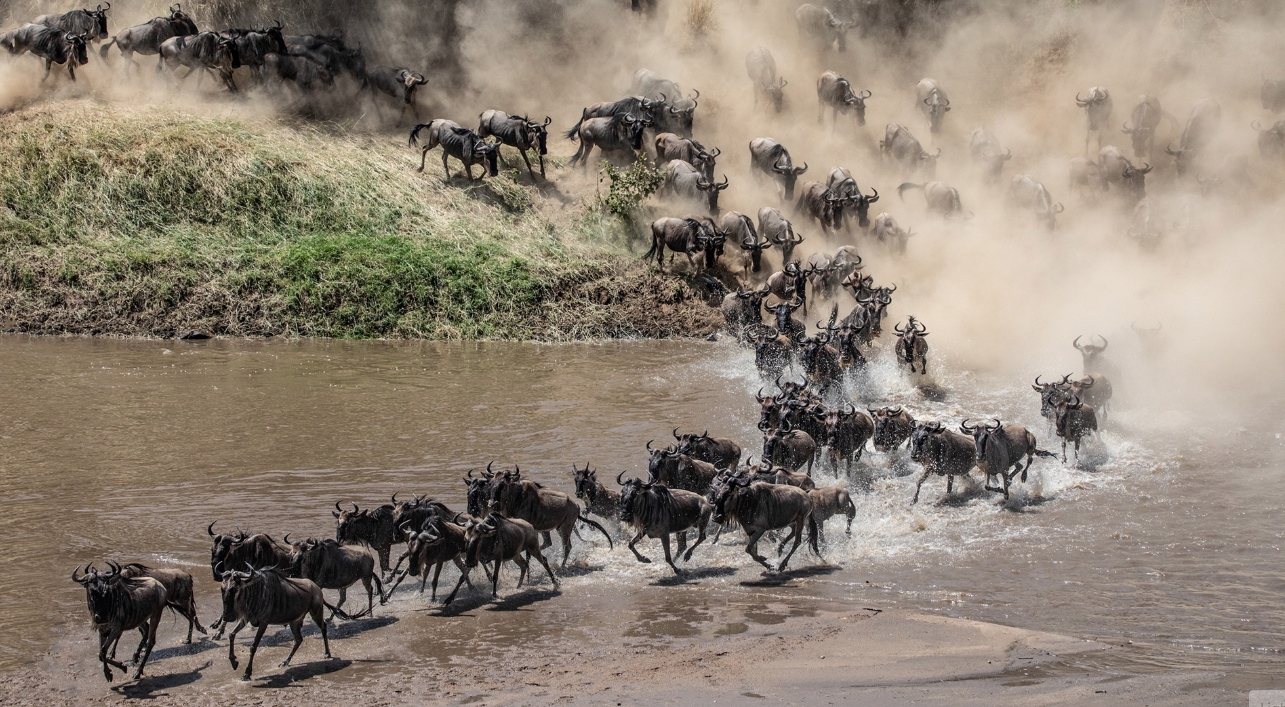
Best for Mara River crossings and Great Migration photography.
Western Corridor (May–July)
Superb for migration movement, river scenes, and fewer vehicles.
Strategic camp placement is often more important than visiting many locations.
Ngorongoro, Tarangire, and Lake Manyara for Wildlife Photography
A Private Tanzania Photo Safari becomes even richer when combined with the Northern Circuit’s other iconic parks.
Additionally, Tanzania’s diverse ecosystems offer a stunning array of backdrops for visual storytelling. From the iconic volcanic caldera of Ngorongoro to the remote, baobab-studded riverbanks of the south, selecting the right locations is critical for capturing high-quality imagery.
To explore the full breadth of these regions, photographers can Explore More Places in Tanzania to tailor their perfect route.
- Ngorongoro Crater: Close-range wildlife photography, including black rhinos and large lion prides.
- Tarangire National Park: Massive elephant herds and ancient baobab trees create dramatic compositions.
- Lake Manyara National Park: Flamingos, groundwater forests, and diverse birdlife offer excellent landscape and bird photography.
These parks provide visual variety that complements the open plains of the Serengeti.
For those focusing on the epic movement of over two million wildebeest and zebras, booking a specialised Tanzania Migration Safari is essential.
Timing is everything when capturing these dramatic herds, and choosing a highly tailored itinerary like the Private Great Migration Viewing: A Masterclass in Exclusive Safari Design for 2026 ensures front-row access to river crossings and calving events away from the tourist crowds.
Remote Wilderness Photography: Ruaha, Katavi, and Mahale
For photographers seeking raw, untamed landscapes and complete isolation, the southern and western regions of Tanzania offer an unparalleled alternative to the busier northern parks. Here, the wilderness is vast, ancient, and deeply atmospheric, as detailed in Tanzania: Where the Earth Still Dreams.
Ruaha National Park is a paradise for connoisseurs, containing more baobab trees than almost any other African park. Its rugged terrain, seasonal rivers, and massive prides of 20 to 25 lions provide dramatic, high-contrast backdrops.
Further west, Katavi National Park offers a raw, dry-season spectacle where thousands of hippos and crocodiles crowd into shrinking pools, surrounded by massive herds of buffalo.
For a complete contrast, Mahale Mountains National Park rises dramatically from the crystal-clear waters of Lake Tanganyika. This pristine rainforest is home to the world’s largest wild population of chimpanzees.
Primate photography here requires patience and low-light skill, but capturing the expressive gestures of a chimpanzee amidst the emerald canopy is one of the ultimate achievements in wildlife photography.
These destinations are ideal for photographers who value exclusivity and authentic wilderness over famous tourist hotspots.
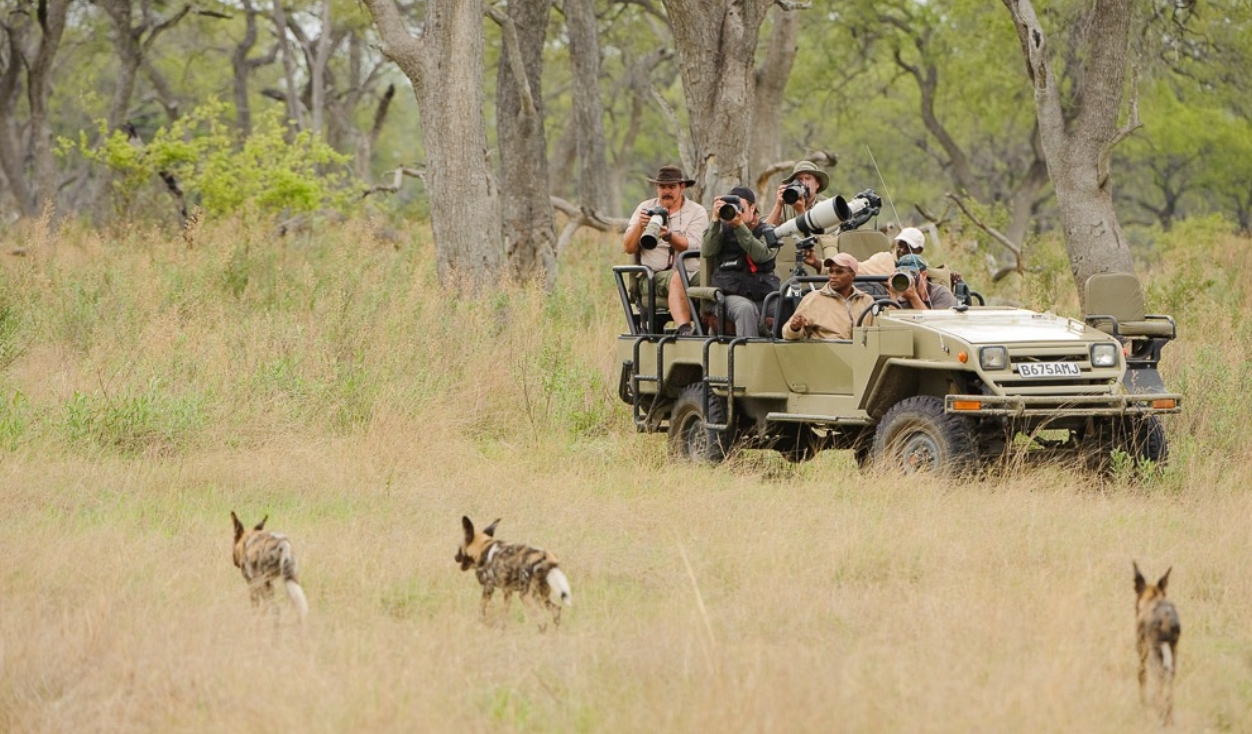
Specialized Vehicles, Camera Gear, and Photography Logistics
Professional wildlife photography requires specialized infrastructure. The custom vehicles used on a Private Tanzania Photo Safari typically include rotating seats, low-angle hatches, beanbag supports, charging stations, and secure storage for camera equipment.
Bus-flight luggage limits are an important planning consideration. Scheduled flights usually allow around 15 kg (33 lb) in soft-sided bags, so photographers carrying heavy lenses may benefit from private charters or additional baggage arrangements.
Careful logistics planning protects equipment and ensures smooth travel between remote parks.
Custom Photographic Vehicles and Equipment Logistics
The vehicles used on exclusive Tanzania photo safaris are engineered specifically for visual creators. Unlike standard safari trucks, these custom 4×4 Land Cruisers feature the following:
- 360-degree rotating seats that allow photographers to track moving subjects smoothly without leaving their seats.
- Drop-down sides and low-angle hatches that enable eye-level perspectives, which are crucial for creating intimate, powerful portraits of predators.
- Integrated camera support systems, including pre-filled beanbags, foam mounting brackets, and specialised gimbals to stabilise heavy telephoto lenses.
- In-vehicle charging stations equipped with universal power outlets and USB ports to keep camera batteries, laptops, and storage drives fully powered throughout the day.
Navigating the logistics of heavy camera gear is also a key consideration. Internal bush flights in Tanzania enforce strict luggage weight limits, typically around 15 to 20 kg.
To accommodate photographers travelling with multiple bodies, heavy prime lenses, and sturdy tripods, premier operators arrange private charter flights with expanded weight limits (up to 35 kg of hand-carried gear) or secure an extra seat on regional flights specifically to carry delicate equipment safely.
How Expert Photography Guides Improve Your Serengeti Safari
Even the most advanced equipment is of little use without an expert behind the wheel. The guides on exclusive photo safaris are highly trained professionals who understand the technical nuances of photography.
Many have undergone specialised training workshops covering the relationships between light, shutter speed, and aperture.
An expert guide knows how to position the vehicle relative to the sun, ensuring that the subject is perfectly front-lit, side-lit for texture, or backlit for dramatic rim-light silhouettes.
They also possess a deep understanding of animal behaviour, allowing them to anticipate when a predator is about to hunt, yawn, or shake off dust, giving the photographer ample time to prepare their settings.
For a masterfully curated journey led by these top-tier specialists, the Crowned in the Wild: A Classic Tanzania Safari offers an exceptional entry point into the art of professional tracking and photography.
On a Private Tanzania Photo Safari, the guide becomes an active creative partner rather than simply a driver.
Planning Your Private Tanzania Photo Safari: Timing and Conservation
A successful safari is a harmonious blend of seasonal timing, luxury comfort, and ethical travel practices that preserve the very wilderness being documented.
Best Time for a Private Tanzania Photo Safari
Understanding Tanzania’s seasonal cycles is vital for planning your shoot. To select the perfect window for your creative goals, consult our comprehensive guide on the Best Time to Visit Tanzania.
The Dry Season (June to October): This is the classic window for wildlife viewing. As water sources dry up, animals concentrate predictably around rivers and waterholes.
The vegetation thins out, making predators easier to spot and track. This is also the prime season to witness the dramatic Mara River crossings in the northern Serengeti, a spectacle detailed in the Great Migration: A Signature Safari Journey.
The Green Season (November to May): Often overlooked by general tourists, this is highly favoured by professional photographers. The rains clear the dust from the air, resulting in incredibly crisp, clean light and vibrant green backdrops.
Dramatic storm clouds provide moody, cinematic skies, and the calving season in the southern Serengeti (January to March) brings an abundance of newborn plains game and intense predator action.
Many professional photographers prefer the green season because the light is softer, colours are richer, and the scenery is far more vibrant than during the peak dry season.
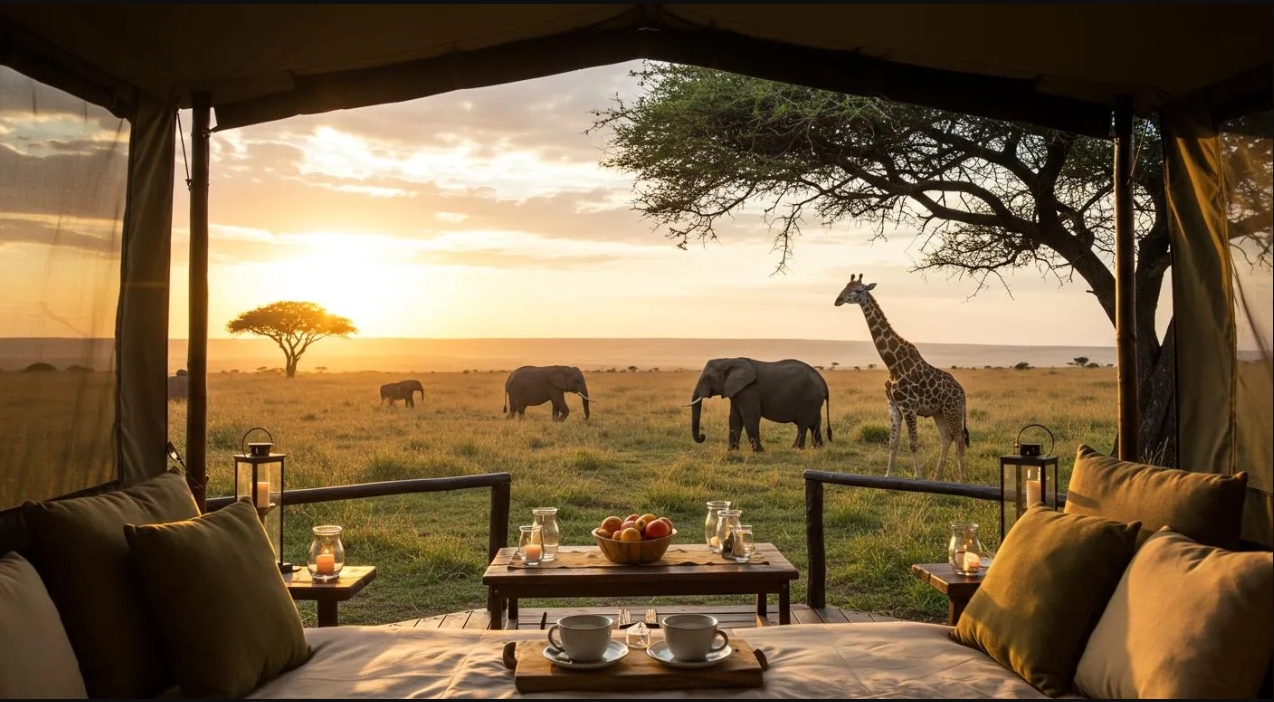
Luxury Camps That Support Conservation and Photography
The finest camps on a Private Tanzania Photo Safari combine photographic access with genuine conservation commitment. Guests enjoy spacious canvas suites, private decks, gourmet dining, and exceptional service while staying in areas that actively protect wildlife habitat.
Look for camps that use solar power, reduce single-use plastics, support anti-poaching initiatives, and invest in local education and employment. Responsible luxury travel helps ensure that Tanzania’s extraordinary wildlife remains protected for future generations of photographers.
Importantly, these luxury operations are deeply committed to conservation and community empowerment. By staying at eco-friendly properties that utilise solar power, minimise single-use plastics, and actively support anti-poaching initiatives, photographers ensure their presence has a positive impact.
Furthermore, these camps provide fair wages and educational scholarships to local communities, fostering a sustainable relationship between tourism and wildlife preservation. A journey like the 13-Day Tanzania & Zanzibar Luxury Safari perfectly illustrates how premium travel can support both critical conservation efforts and local economies.
Frequently Asked Questions About Private Tanzania Photo Safaris
What camera gear should I bring on a Private Tanzania Photo Safari?
Bring two camera bodies, a telephoto lens such as 100–400mm or 200–600mm, a mid-range zoom, a wide-angle lens, extra batteries, memory cards, and dust-protection accessories.
How much luggage is allowed on Tanzania bush flights?
Most scheduled bush flights allow about 15 kg (33 lb) in soft-sided bags. Private charters or additional baggage arrangements can usually be organised for professional camera equipment.
Is the green season good for wildlife photography?
Yes. The green season offers lush landscapes, cleaner air, dramatic storm clouds, fewer vehicles, and excellent calving-season photography in the southern Serengeti.
Do I need a private vehicle for serious wildlife photography?
A private vehicle is highly recommended because it provides unrestricted shooting angles, flexible timing, and the ability to remain at sightings as long as the light and behaviour are favourable.
What is the best month for Serengeti photography?
July to October is best for migration river crossings and general wildlife density, while January to March is exceptional for the calving season and predator activity.
Are private Tanzania photo safaris suitable for beginners?
Absolutely. Expert photographic guides can assist with camera settings, composition, lighting, and wildlife behaviour, making these safaris valuable for both beginners and professionals.
Can I combine the Serengeti with other photography destinations in Tanzania?
Yes. Popular combinations include the Serengeti with Ngorongoro Crater, Tarangire, Ruaha, Katavi, or Mahale, depending on your wildlife and landscape photography goals.
Contact us at Queen of East Africa Luxury Tours for unforgettable wildlife safari experiences.
One Response