Plan your gorilla trekking adventure in East Africa, particularly Uganda and Rwanda, with expert guides in Bwindi and Volcanoes National Parks. Discover costs, permits, what to expect, and why this safari is worth every step.
The rustle in the forest. A guide’s hand for silence. Then the quiet presence of a mountain gorilla family just ahead. Luxury gorilla trekking tours in Africa are not about seeing a rare animal. They are about how the day unfolds. The support you feel.
The memory that stays with you long after you return from Bwindi or Volcanoes. For travelers seeking East Africa at a luxury level, gorilla trekking becomes the emotional center of the journey. It asks something of you physically.
It gives back in a way few wildlife encounters can. With the right planning, a gorilla trek feels intimate and restorative. Without it, the day can feel rushed and heavy.
For travelers considering East Africa at a luxury level, gorilla trekking often becomes the emotional center of the journey. It has gravity. It asks something of you physically, but it gives back in a way few wildlife encounters can.
That is precisely why planning matters. A gorilla trek can feel exhilarating, moving, and beautifully intimate, or it can feel rushed and logistically heavy if the details are not handled well.
What Makes Gorilla Trekking Adventure in East Africa so Exceptional
Unlike a game drive, gorilla trekking is personal from the start. Your day begins early, often with mist over the hills of Bwindi Impenetrable Forest or Volcanoes National Park. You move on foot with expert trackers who know the terrain.
There is no theatre. No setup. You enter a living landscape and adjust to the gorillas, not the other way around.
That is where the emotional power lives. When you meet a family that is habituated, your hour with them feels intimate and restrained. A silverback watching from a few yards away. Juveniles in the vines. A mother holding her infant close.
Luxury travellers often ask whether the trek itself is “worth it” given the cost, the permits, and the physical effort. For most, the answer is yes, but not in a simplistic way. It is worth it when the surrounding journey reflects the significance of the encounter.
The quality of guiding, the right lodge location, thoughtful pacing, and private support all shape whether the experience feels extraordinary or merely demanding.

Uganda vs Rwanda: Which Is Best for Your Gorilla Trekking Adventure in East Africa?
Choosing between Uganda and Rwanda is one of the most important decisions for your gorilla trekking adventure in East Africa.
Rwanda: Ease and Efficiency
Rwanda is often chosen by travelers who prioritize ease, polished infrastructure, and shorter transfer times from an international arrival point.
Volcanoes National Park can be reached from Kigali in a matter of hours, which makes it appealing for shorter luxury itineraries or for travelers combining gorilla trekking with a wider East Africa journey.
The overall experience can feel efficient and refined, especially for those who want to keep travel days minimal.
Uganda: Depth and Atmosphere
Uganda offers a different rhythm. Bwindi Impenetrable National Park is more remote and layered and often feels deeply atmospheric. The terrain can be challenging, but many travelers call it more atmospheric and rewarding. Uganda also lets you build richer journeys.
Combine gorilla trekking with chimpanzee tracking, classic safaris, and deeper cultural immersion.
The Verdict
Neither destination is universally better. Rwanda may suit a honeymoon couple wanting a sleek, high-comfort itinerary with limited transit. Uganda may be ideal for travelers who want a broader adventure with more depth across several regions.
The key is matching the country to the traveler rather than assuming one destination fits everyone.
This is one of the most important planning decisions, and the right answer depends on your travel style.
The Physical Side of Your Gorilla Trekking Adventure in East Africa: Why Preparation Matters
Gorilla trekking is not effortless. Be honest about that upfront. Conditions vary. Some treks are relatively moderate and end within a few hours. Others involve steep slopes, muddy trails, thick vegetation, and longer hiking times at altitude.
The experience is manageable for most travellers, but preparation changes everything and should be approached honestly.
That said, luxury and adventure are not opposites here. The difference is in how the trek is designed around you. A well-planned itinerary includes proper briefings, realistic pacing, and accommodations that allow for rest before and after the trek.
Porters can make a meaningful difference, not just for carrying daypacks but for extra stability on uneven terrain. The best guides also read the group well, balancing encouragement with realism.
Travelers who are active but not extreme hikers often do very well with some preparation before departure. Walking regularly, building leg strength, and arriving with the right gear can make the day much more enjoyable. What matters most is not athleticism for its own sake, but readiness.
When you are comfortable enough physically, you can stay present for the encounter itself rather than focusing only on the effort it took to get there.
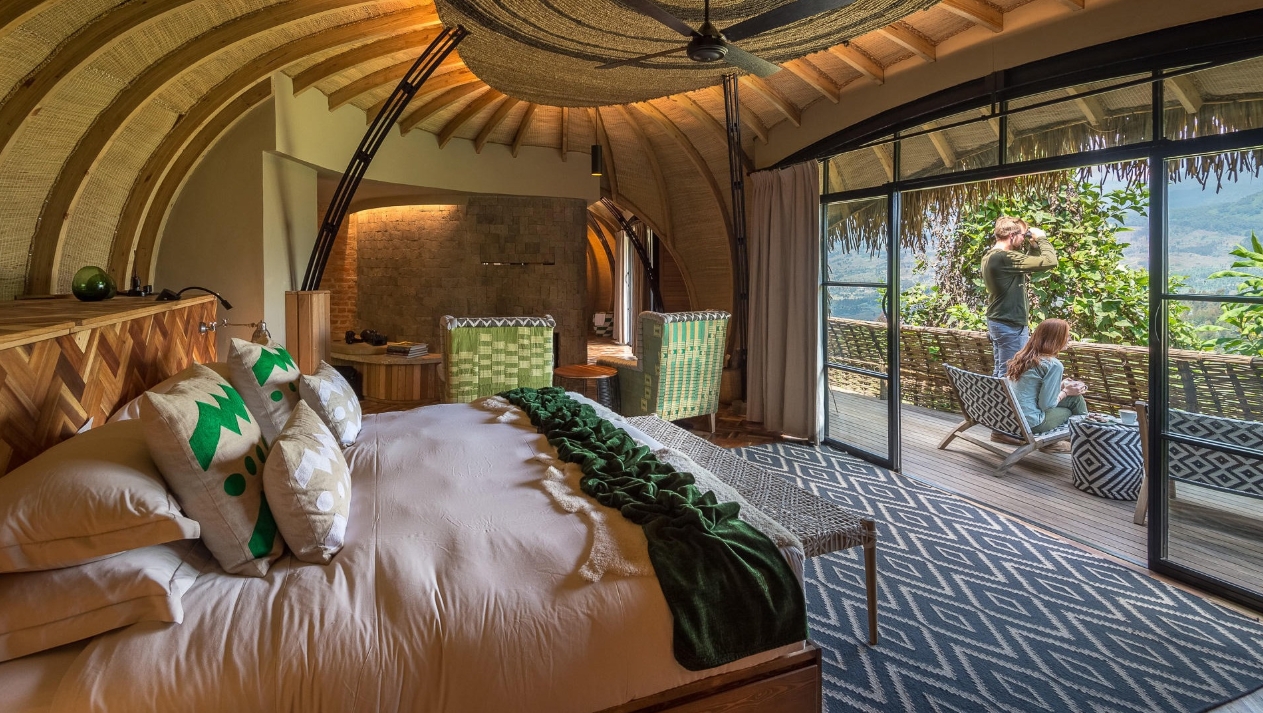
Choose the Right Lodge for Your Gorilla Trekking Adventure in East Africa
gorilla permit gets you access. Your lodge sets the tone of your gorilla trekking adventure in East Africa. After an early start and a demanding trek in Bwindi or Volcanoes, you want more than a bed. You want warm service, a great meal, a deep bath, and misty forest views. That shift turns a tiring day into a restorative one.
Location vs. Experience
Location matters. Some luxury lodges sit closer to specific trekking sectors. That cuts morning transfer time and keeps your schedule smooth. Others stand out for privacy, design, cuisine, or a stronger sense of place.
Some travelers want intimacy and quiet. Others want spa treatments, family-friendly space, or honeymoon touches. Don’t choose a lodge because it’s popular. Choose it because it fits your travel style and the wider journey.
Why a Gorilla Trekking Adventure in East Africa Should Include Safari and Beach
A single gorilla trek can be life-changing. It becomes even more meaningful inside a broader East African itinerary. Gorilla trekking is intense in the best way. Pair it with time on safari and a few restorative nights at a beach camp to create balance.
How to Build the Journey
For couples, that might look like gorilla trekking in Rwanda followed by Serengeti and then the Indian Ocean. For families, Uganda can be paired with wildlife viewing that gives younger travelers a different pace and rhythm. For milestone celebrations, a gorilla trek often becomes the defining memory within a larger legacy journey.
The point is not to add more for the sake of more. It is to shape contrast. Forest intimacy feels even more powerful when set against open savanna. A physically active day feels more rewarding when followed by rest and exceptional hospitality.
The finest itineraries are composed with that rhythm in mind.
Guidance, Permits, and Timing for Your Gorilla Trekking Adventure in East Africa
Gorilla permits are limited. That exclusivity protects the experience, but it also means timing is critical. If you are travelling during holidays, school breaks, or milestone dates, book early.
Securing the right permits first gives you better access to the most suitable lodges in Bwindi Impenetrable National Park and Volcanoes National Park, hence a smoother route design.
Seasonality Matters
Seasonality also matters since it deserves a thoughtful conversation rather than a simplistic answer. Drier periods are often more popular because trail conditions can be easier, but shoulder seasons can be appealing for travellers who value a quieter atmosphere and are comfortable with a little unpredictability.
Rain does not erase the magic of the forest – in many ways, mist and moisture are part of its character – but it does affect comfort and hiking conditions.
The Logistics Layer
Strong planning also accounts for the details you shouldn’t manage: road transfers, charters, permit coordination, luggage handling, dietary needs, and pacing between destinations. The time with gorillas may be one hour.
The success of your gorilla trekking adventure in East Africa depends on everything wrapped around it.

Gorilla Trekking Adventure in East Africa for Every Traveler Type
No two travelers want the same gorilla trekking adventure in East Africa.
Honeymooners want privacy, beauty, and shared wonder.
Families want a multigenerational journey, meaning without sacrificing comfort.
Seasoned safari travelers want a more intimate wildlife encounter.
First-time visitors want to do something singular and get it right the first time.
That is why personalization matters. One traveler may want a short, elegant Rwanda itinerary with premium lodge stays and minimal complexity. Another may want a more expansive Uganda journey with cultural depth and several wildlife regions.
A company like Queen of East Africa Luxury Tours understands that difference because the value is not just in booking a trek. It is in designing the entire experience around the traveler’s pace, preferences, and expectations.
The finest gorilla trekking experiences feel effortless on the surface, even though they require careful orchestration behind the scenes. That is the quiet art of luxury travel in East Africa.
Plan Your Bespoke Gorilla Trekking Adventure in East Africa with Queen of East Africa Luxury Tours
What You Will Remember Most from a Gorilla Trekking Adventure in East Africa
Most people often expect to remember the size of the silverback or the closeness of the encounter, and they do. But just as often, what lingers is something more subtle. The stillness of the forest. The discipline of the trackers. The way a single hour can feel expansive. The sense that this was not simply a sightseeing moment, but a rare kind of presence.
That is why gorilla trekking belongs in the category of transformational travel rather than ordinary adventure. It asks you to arrive fully. And when planned with care, comfort, and emotional intelligence, it gives you a story that does not fade with time.
If this journey is on your list, let it be done beautifully. With the right destination, the right pace, and enough thought around the details so the encounter remains exactly what it should be: unforgettable.
Frequently Asked Questions (FAQ) About Gorilla Trekking Adventure in East Africa
1. Which is better for a gorilla trekking adventure in East Africa: Uganda or Rwanda?
It depends on your travel style. Rwanda’s Volcanoes National Park is 2-3 hours from Kigali. It’s best for shorter trips and high-comfort itineraries. Uganda’s Bwindi Impenetrable National Park is more remote and atmospheric. It’s ideal if you want to combine gorillas with chimpanzee tracking and classic safaris.
2. How difficult is a gorilla trekking adventure in East Africa?
Fitness levels vary, but preparation helps. Some treks are moderate and take a few hours. Others are steep, muddy, and at altitude. Porters, pacing, and lodges close to trailheads make it manageable for most active travelers. You don’t need to be an extreme hiker.
3. How much do gorilla permits cost for a gorilla trekking adventure in East Africa in 2026?
Government authorities in Uganda and Rwanda set permit fees. Since permits are limited, exclusivity helps protect the experience. Booking early secures access to the best sectors and lodges. A specialist handles coordination so you don’t have to.
4. What is the best time of year for a gorilla trekking adventure in East Africa?
Gorilla trekking runs year-round. Drier months offer easier trails. Shoulder seasons have fewer crowds and a quieter forest, with some rain. Mist and moisture are part of the experience in Bwindi and Volcanoes and don’t reduce the magic.
5. Can I combine a gorilla trekking adventure in East Africa with a safari or beach?
Yes. Most luxury itineraries do. Gorilla trekking is intense and emotional. Pairing it with the Serengeti for safari and Zanzibar for beach creates balance. Forest intimacy feels deeper after open savanna and rest.
6. How far in advance should I book my gorilla trekking adventure in East Africa?
Book 10-14 months ahead for peak travel. Gorilla permits sell out fast. Luxury lodges in Bwindi and Volcanoes have limited capacity. Early planning gives you more choice for dates, sectors, and accommodations.
Contact us at Queen of East Africa Luxury Tours