Planning a Private East Africa Safari? Learn the 3 tiers of exclusivity, real costs ($800-$2,500+/night), and how to avoid fake “private” tours. Book with confidence. A Private East Africa Safari is more than a vehicle for you. It means layered control over access, timing, and personalisation that standard group tours never offer.
Many trips labelled “private” only guarantee you won’t share a jeep. True private travel in Kenya, Tanzania, Rwanda, and Uganda includes exclusive-use camps, conservancy access, and guides who adapt to your pace, not a fixed schedule.
This guide breaks down the real tiers, costs, logistics, and what “exclusive” actually delivers, so you book based on clarity, not marketing fluff.
Table of Contents
- Key takeaways
- What a private East Africa safari really means
- The benefits of a private East Africa safari cost $800
- Understanding the costs of exclusive-use travel on private East Africa safari
- Planning logistics for a multi-country private itinerary
- Where to experience true private exclusivity in East Africa
- My honest take on what private travel actually delivers
- Plan your private East Africa safari with Queensafaris
- FAQ
Key takeaways
| Point | Details |
|---|---|
| Exclusivity has three tiers | Private vehicle, private conservancy access, and fully exclusive-use camps each offer distinct levels of control and intimacy. |
| Control beats luxury labels | True private access means shaping your own pace, timing, and focus, not just staying in a premium lodge. |
| Costs range widely | Expect $800 to $2,500+ per person per night, with most all-inclusive packages covering meals, guides, and game drives. |
| Logistics require advance planning | Multi-country visas often need 30 days’ lead time, and border crossings demand patience and preparation. |
| Expert operators change everything | A concierge-style specialist handles the invisible complexity so your experience feels effortless and deeply personal. |
What is a Private East Africa Safari? 3 Tiers of Exclusivity
The phrase “private safari” gets applied to experiences ranging from a shared lodge with your own vehicle to a fully exclusive camp where no other guests exist on the property. Understanding the difference is not a minor detail. It determines the quality of your wildlife encounters, your freedom to move, and the depth of your cultural immersion.
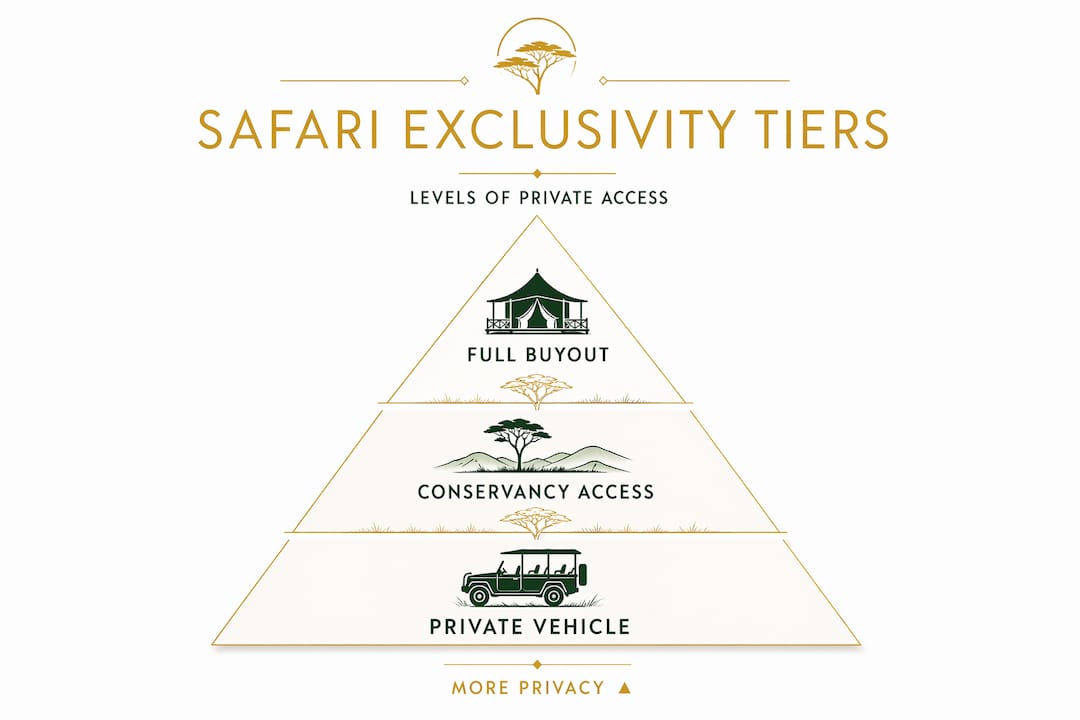
Three distinct tiers define private safari exclusivity in East Africa:
- Private vehicle, shared lodge. You travel with your own guide and vehicle but return each evening to a lodge where other guests dine, relax, and move through the same spaces. Privacy exists on the road, not at camp.
- Private conservancy access. You stay within or adjacent to a conservancy that limits total vehicle numbers across its land. This dramatically reduces crowding at sightings and unlocks activities like night drives and walking safaris that national parks prohibit.
- Fully exclusive-use camps. The entire property, every tent, every guide, every vehicle, is reserved for your group alone. No shared dining, no strangers at the fire, no compromises on timing or focus.
| Tier | Vehicle | Lodge/Camp | Activities unlocked |
|---|---|---|---|
| Private vehicle, shared lodge | Private | Shared | Standard game drives |
| Private conservancy access | Private | Semi-private | Night drives, walking safaris |
| Fully exclusive-use | Private | Exclusive | All of the above, plus full schedule control |
The conservancy model is where the experience shifts most noticeably for discerning travellers. Vehicle density drops significantly in private conservancies compared to national parks, meaning a leopard sighting belongs to you rather than a convoy of twenty vehicles.
Pro Tip: When evaluating any private safari, ask specifically whether the conservancy fee is included and how many vehicles are permitted per sighting. These two questions reveal more about true exclusivity than any brochure description.
The Benefits of Private East Africa Safari
The benefits of a Private East Africa Safari go far beyond luxury lodges and aesthetics. It changes how you experience wildlife, culture, and time on the ground in Kenya, Tanzania, and Uganda. Instead of following a set group schedule, you get exclusive access that puts you in control of every game drive and sighting.
The most underrated advantage is operational control over timing and pace. On a shared group safari, vehicles often depart at 6:30 a.m. regardless of light, weather, or animal activity. With a Private East Africa Safari, your guide sets the schedule around you. That means waiting for golden hour light, staying with a cheetah sighting for two hours instead of twenty minutes, and choosing a quiet river bend over a crowded waterhole.
Pro Tip for evaluating exclusivity: Before you book any Private East Africa Safari, ask two specific questions. First, is the conservancy or park fee included in your rate? Second, how many vehicles are allowed per wildlife sighting? The answers tell you more about true privacy than any brochure ever will.
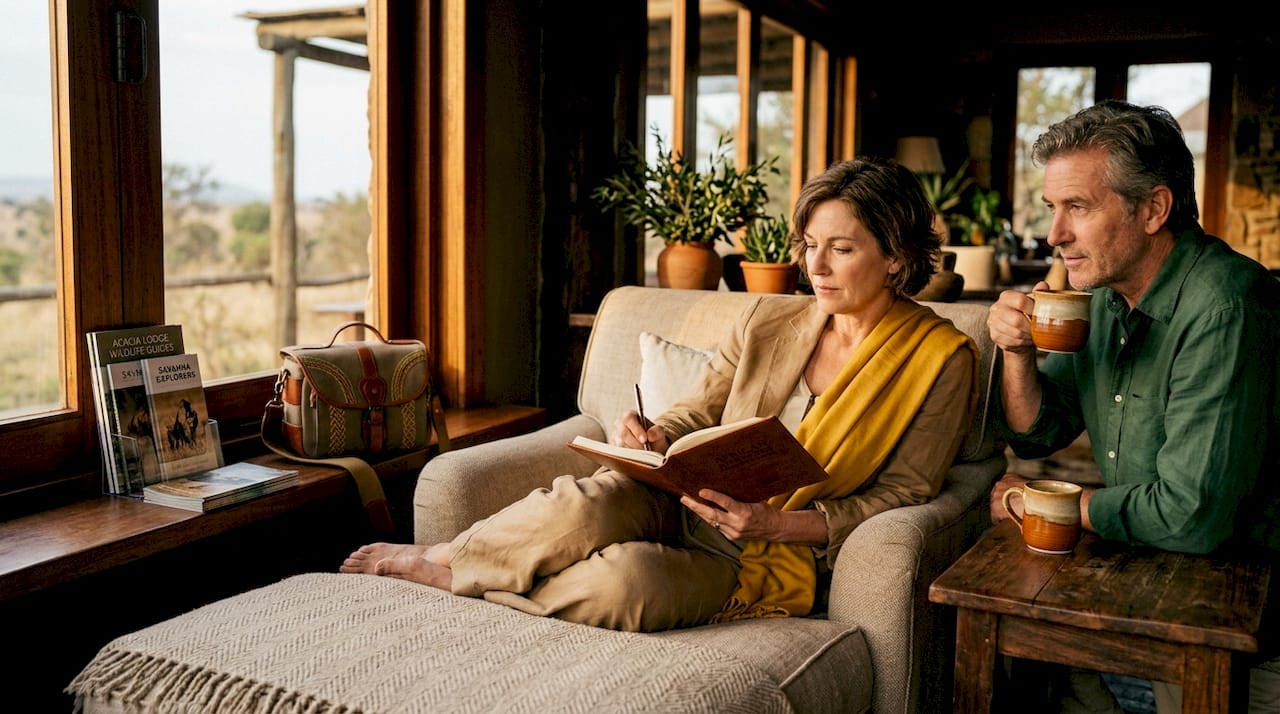
Costs and Exclusive Benefits of a Private East Africa Safari
The benefits of a Private East Africa Safari extend into cultural encounters as well. A private guide becomes your interpreter, not just of language, but of context. They can arrange an unscripted visit to a Maasai homestead, a conversation with a local elder, or a morning walk through a village market that no group itinerary would ever schedule. These moments are not add-ons. They are the texture of a genuinely transformative journey.
Consider what Mwiba Lodge in the southern Serengeti offers as an exclusive-use property for a Private East Africa Safari: unlimited game drives timed to optimal animal activity, all meals and drinks included, cultural experiences woven into the daily rhythm, and transfers managed entirely by the camp. Nothing is shared. Nothing is rushed.
“Exclusivity is more about control than luxury labels, enabling deeper interaction with wildlife and the environment.” Touring Insights
Additional benefits worth understanding on a Private East Africa Safari:
- Walking safaris and night drives are available only in private conservancies and exclusive-use areas, offering a perspective on the bush that a vehicle can never replicate.
- Off-road tracking is permitted in many conservancies, allowing guides to follow animal tracks across open terrain rather than staying on designated roads.
- Personalized naturalist sessions with your guide, reviewing field notes, discussing behavior patterns, and planning the next day’s focus turn a safari into an education.
Pro Tip: If cultural immersion matters to you, tell your operator before the itinerary is designed, not after. The best private guides can arrange encounters that feel organic rather than staged, but only when given the time and context to plan them properly.
Private East Africa Safari Cost Guide: What You Actually Pay For
Pricing for a Private East Africa Safari reflects the level of access, exclusivity, and service you receive. In Kenya, Tanzania, and Uganda, premium private camps typically start around $800 per person per night and can reach $2,500 or more for ultra-premium tented camps during peak season.
| Experience level | Price per person per night | Typical inclusions |
|---|---|---|
| Private vehicle, shared lodge | $400–$800 | Accommodation, meals, game drives |
| Private conservancy access | $800–$1,500 | Above plus conservancy fees, night drives |
| Fully exclusive-use camp | $1,500–$2,500+ | All of the above plus all transfers, cultural activities, drinks |
Most all-inclusive packages at the exclusive-use level for a Private East Africa Safari cover:
- All meals and premium beverages
- Private guide and vehicle for every game drive
- Conservancy and park fees
- Laundry and Wi-Fi where available
- Internal airstrip transfers
Extra costs to plan for on a Private East Africa Safari
Many travellers overlook add-ons when budgeting. Common extras include hot air balloon flights over the Serengeti or Masai Mara at $450 to $500 plus landing fees, premium gorilla trekking permits in Uganda and Rwanda, and gratuities for guides and camp staff. International flights and travel insurance sit entirely outside your Private East Africa Safari package, so factor them in early.
Best time to book for value and access
High season for a Private East Africa Safari runs July through October and December through February. That demand is driven by the Great Migration and dry weather, so prices peak and availability tightens fast. Shoulder seasons, especially March through June, offer a stronger balance of exclusivity and value. You get lush green landscapes and far fewer vehicles across the ecosystem without sacrificing privacy.
Private East Africa Safari Logistics: Planning a Multi-Country Itinerary
Arranging a fully Private East Africa Safari across multiple countries requires more advance planning than most travelers expect. The trip itself feels effortless when done well. The logistics behind it are anything but simple.
- Apply for visas at least 30 days in advance. Multi-country itineraries often require separate visas for Kenya, Uganda, Tanzania, and Rwanda, each with different processing timelines and requirements. The East Africa Tourist Visa covers Kenya, Uganda, and Rwanda in a single application, but Tanzania requires its own entry documentation.
- Prepare for border crossing realities. Travellers moving between Kenya and Uganda, or Rwanda and Tanzania, regularly encounter currency issues, visa reapplication requirements, and unpredictable wait times. Arriving with small amounts of local currency in each country and printed copies of all documentation reduces delays and friction on your Private East Africa Safari friction.
- Coordinate all airstrip and lodge transfers in advance. Private airstrips in the Masai Mara, Serengeti, and Laikipia operate on tight schedules. A missed connection between an airstrip and a remote lodge can unravel an entire day of your Private East Africa safari.
- Use a concierge-style operator for multi-country trips. Coordinating visas, permits, airstrips, lodge check-in times, and border logistics across four countries is where independent planning breaks down most often. A specialist who manages this for your Private East Africa safari turns a complex route into a fluid experience.
- Build buffer time at borders. Even well-prepared travelers encounter unexpected delays. A private itinerary for a Private East Africa Safari accounts for this with flexible lodge check-in windows and no back-to-back tight connections.
Pro Tip for a Private East Africa Safari: Work with travel advisors who specialize in East Africa. They can address concerns about regional news events, including health advisories, with location-specific context that media coverage rarely provides. This kind of informed guidance is one of the most practical benefits of booking your Private East Africa Safari through a regional specialist.
Best Places for a Private East Africa Safari: Where Exclusivity Is Real
Certain destinations and properties define what genuine exclusivity looks like on a Private East Africa Safari. These areas allow limited vehicles, private activities, and direct access to wildlife without the crowds of public reserves.
- Kenya’s Masai Mara Conservancies. Conservancies bordering the Masai Mara National Reserve enforce strict vehicle limits per sighting. That creates an intimate experience the reserve itself cannot match. Night drives and walking safaris are permitted here, and predator sightings, especially lions and cheetahs, are exceptional. Conservancy access also delivers the most private Great Migration viewing in East Africa.
- Tanzania’s Serengeti Private Concessions. Properties like Mwiba Lodge in the southern Serengeti offer fully exclusive-use stays where your group controls the entire camp and every vehicle on the property. The wildebeest calving season in January and February draws remarkably few visitors compared to the northern corridor, making this one of East Africa’s most underappreciated exclusive experiences on a Private East Africa Safari.
- Laikipia Plateau, Kenya. This rugged highland wilderness north of Mount Kenya offers rhino tracking on foot, camel safaris, and a rawness that busier parks cannot replicate. Vehicle numbers are minimal by design, and the landscape shifts from acacia woodland to open grassland in ways that feel truly wild.
- Ngorongoro Highlands, Tanzania. The crater floor is famous, but the highlands surrounding it blend extraordinary wildlife with geological drama and cultural encounters with the Maasai people who have lived alongside this ecosystem for generations.
Pro Tip for a Private East Africa Safari: When comparing destinations, ask your operator which conservancy or concession your lodge sits within, not just which park it is near. The difference between a lodge inside a private conservancy and one that simply borders a national park is the difference between true exclusivity and a premium version of a standard experience.
Ready to plan your Private East Africa Safari? Speak with a regional specialist to match you with the right conservancy, concession, or exclusive-use camp for your dates, budget, and wildlife goals.
Private East Africa Safari Reality: What “Private” Actually Means on the Ground
I have worked with enough travelers to know that the word “private” sets expectations the industry does not always meet. On a Private East Africa Safari, the most meaningful difference is not thread count or tent design. It is whether you control the day’s rhythm or whether the day controls you.
I have watched guests sit with a pride of lions for ninety uninterrupted minutes because their guide had the freedom to stay. I have seen the same species checked off a list in fifteen minutes because a group schedule demanded it. Those are not the same experience. They produce different memories, different photographs, and a fundamentally different relationship with the natural world on your Private East Africa Safari.
What i have learned is that travelers who book independently often underestimate the invisible complexity of East Africa logistics. Visa timing, border currency, airstrip connections, and permit windows for gorilla trekking in Uganda do not disappear when you go private. They simply become your problem to solve instead of your operator’s. The travelers who arrive most prepared and who leave most transformed are almost always the ones who worked with a specialist who knew the ground before they ever set foot on it during a Private East Africa Safari.
Exclusivity, done properly, is about connection. Connection to the landscape, to the wildlife, and to the cultures that have shaped these places for centuries. Price is the entry point. Control is the product. And the right guide is the difference between a trip you remember and a Private East Africa Safari that changes you.
Plan Your Private East Africa Safari with Queensafaris
Queensafaris designs luxury private Safaris across Kenya, Tanzania, Uganda, Rwanda, and Zanzibar. Every detail is handled by specialists who know these destinations intimately. From exclusive-use conservancy camps in the Masai Mara to private gorilla trekking in Uganda’s Bwindi Impenetrable Forest, each itinerary is built around your pace, your interests, and your vision of an extraordinary journey.
The team manages every logistical layer of your Private East Africa Safari: visas, airstrip transfers, lodge sequencing, and permit bookings. That means the experience you encounter is pure immersion, not coordination. Whether you are planning a private Tanzania safari itinerary for a small group or a bespoke multi-country journey for two, Queensafaris brings the expertise and local relationships that turn a great trip into an unforgettable one.
Start planning your Private East Africa Safari today. Speak with a Queensafaris specialist to check availability, map your route, and lock in exclusive-use camps before high season fills.
Private East Africa Safari FAQ
1. What makes a Private East Africa Safari truly exclusive-use?
An exclusive-use Private East Africa Safari means your group has sole occupancy of an entire camp, lodge, or concession. No other guests share the property. You control game drive timing, daily activities, vehicle numbers, and the overall pace of your stay. This is different from a shared lodge where you only book a private vehicle.
2. How much does a Private East Africa Safari cost per person per night?
Pricing for a Private East Africa Safari typically ranges from $800 to $2,500+ per person per night. The final rate depends on the property, season, and level of exclusivity. Most all-inclusive packages cover meals, a private guide, a vehicle, game drives, and conservancy fees. Extras like hot air balloon flights are usually billed separately.
3. Do I need separate visas for each country on a Private East Africa Safari?
It depends on your route. The East Africa Tourist Visa covers Kenya, Uganda, and Rwanda in one application. Tanzania requires its own visa. For any multi-country Private East Africa Safari, start the visa process at least 30 days before departure to avoid delays at borders or airstrips.
4. When is the best time to book a Private East Africa Safari?
High season for a Private East Africa Safari runs July through October and December through February. This aligns with peak wildlife activity and the Great Migration. Shoulder seasons, March through June, offer strong exclusivity, lush scenery, and fewer vehicles at more accessible price points.
5. Why should I book a Private East Africa Safari with a specialist operator?
A specialist operator manages the invisible complexity of a Private East Africa Safari. That includes border crossings, airstrip connections, permit windows for gorilla trekking, lodge sequencing, and local relationships. This expertise is what separates an effortless, immersive trip from one that requires constant problem-solving on the ground.